
Last updated September 10, 2026
Full 25-point door and opener safety check with every visit - springs, cables, rollers, tracks, and your LiftMaster or Chamberlain opener included
You get a price before we start. It does not change when the truck arrives.



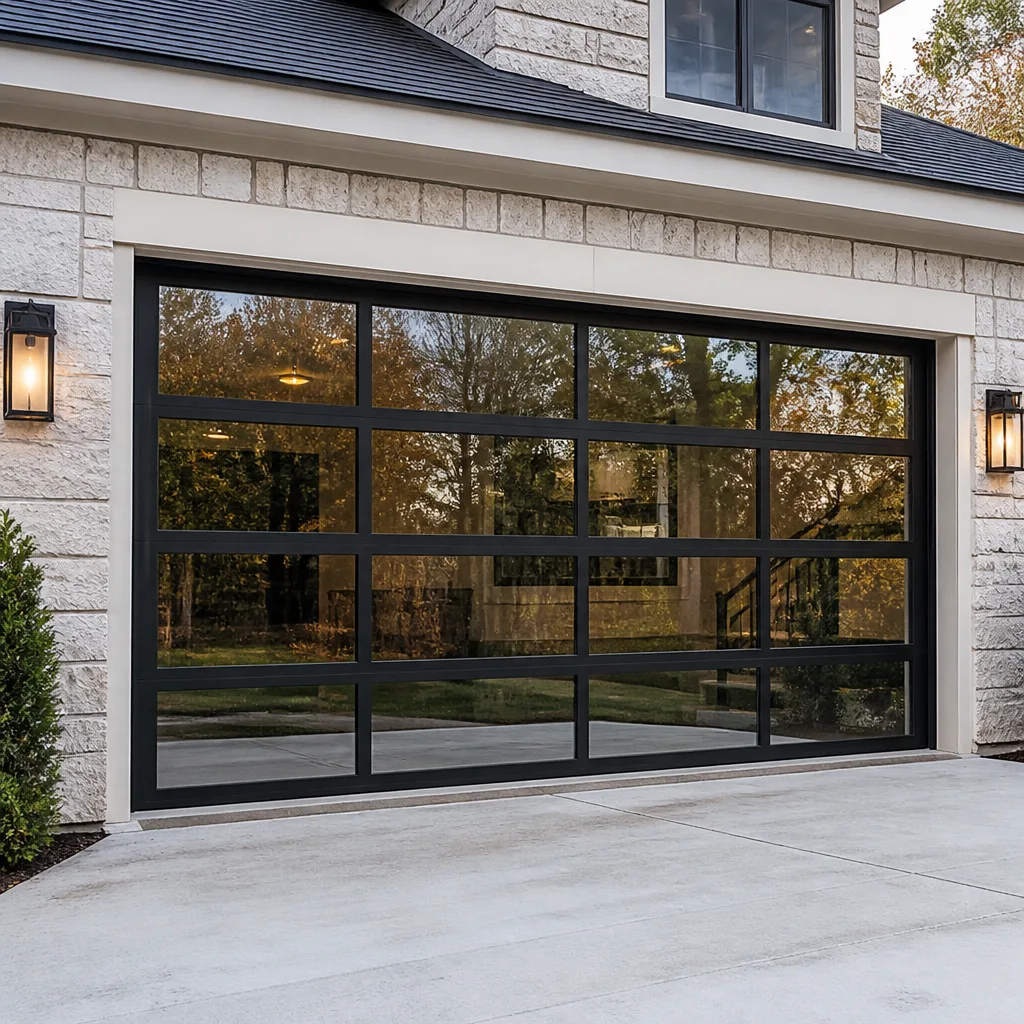


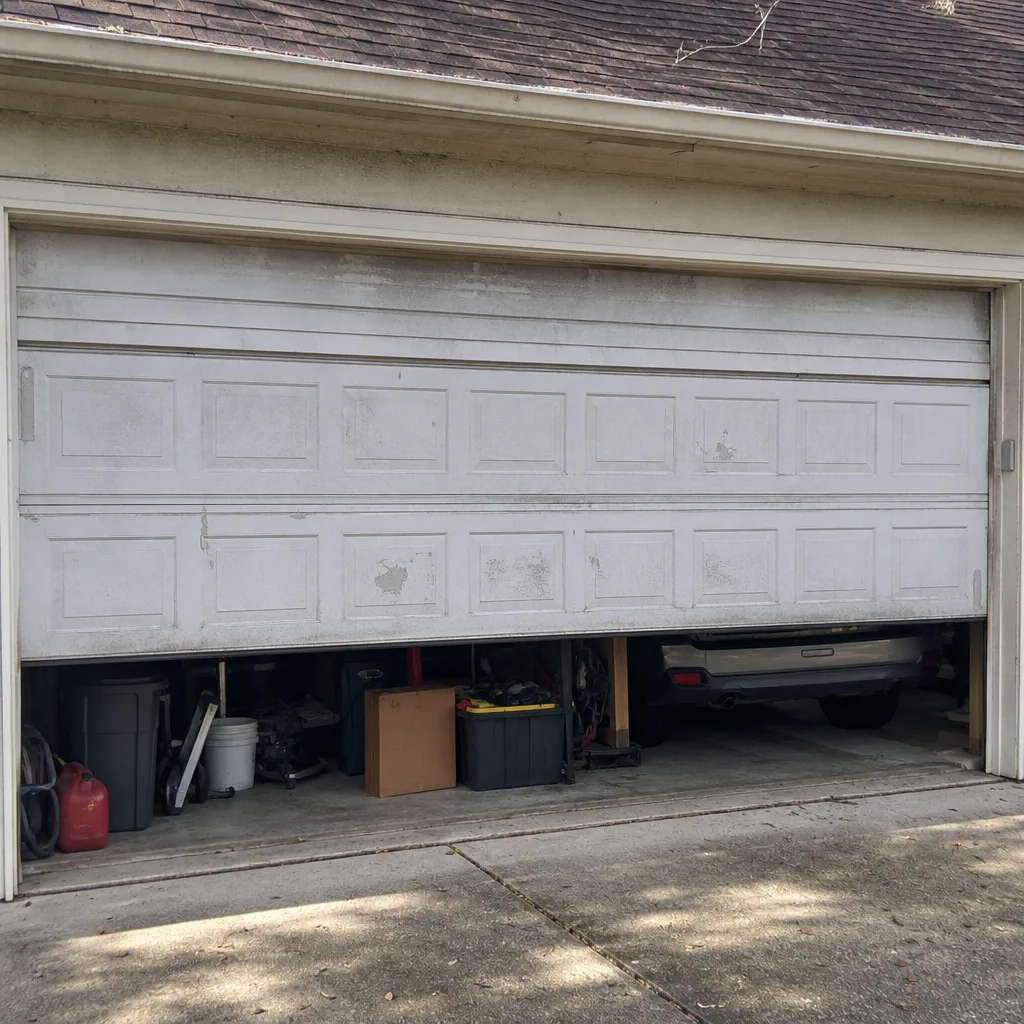 Before
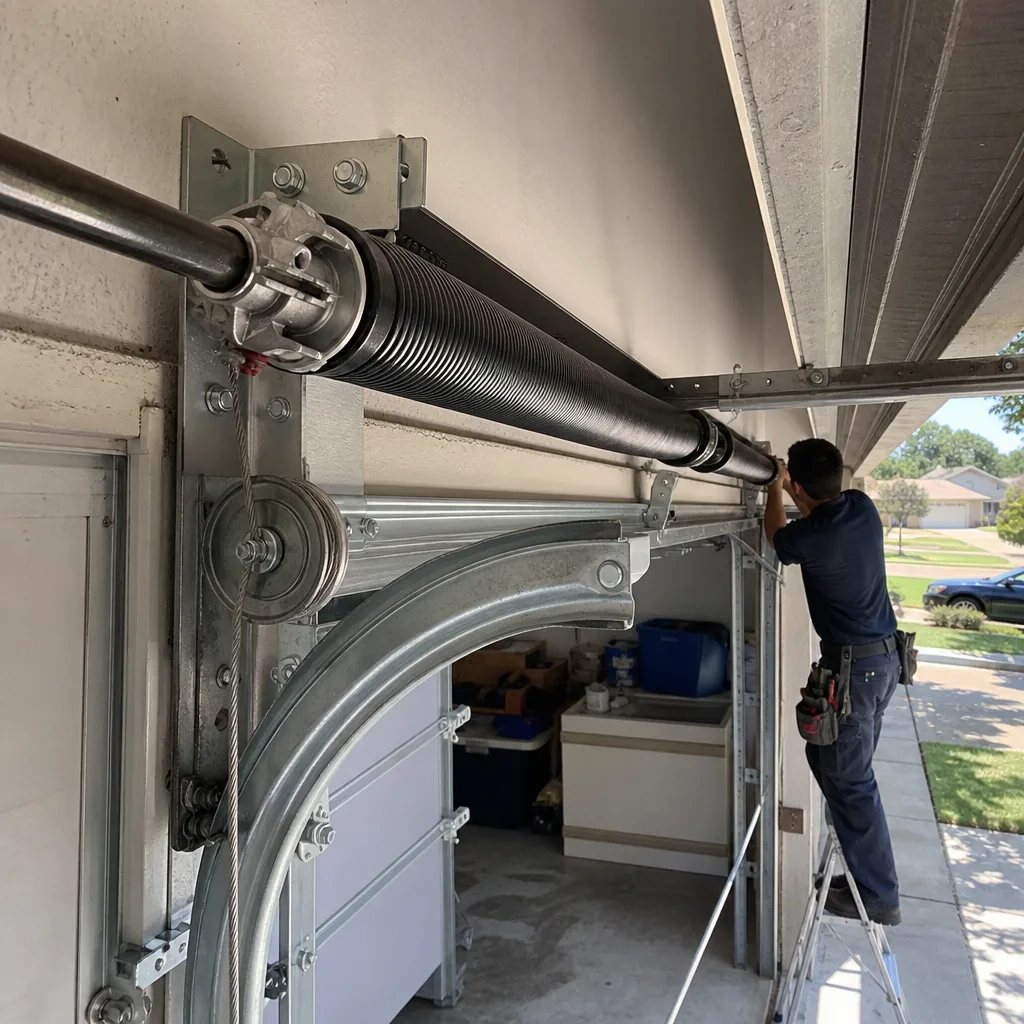 After
After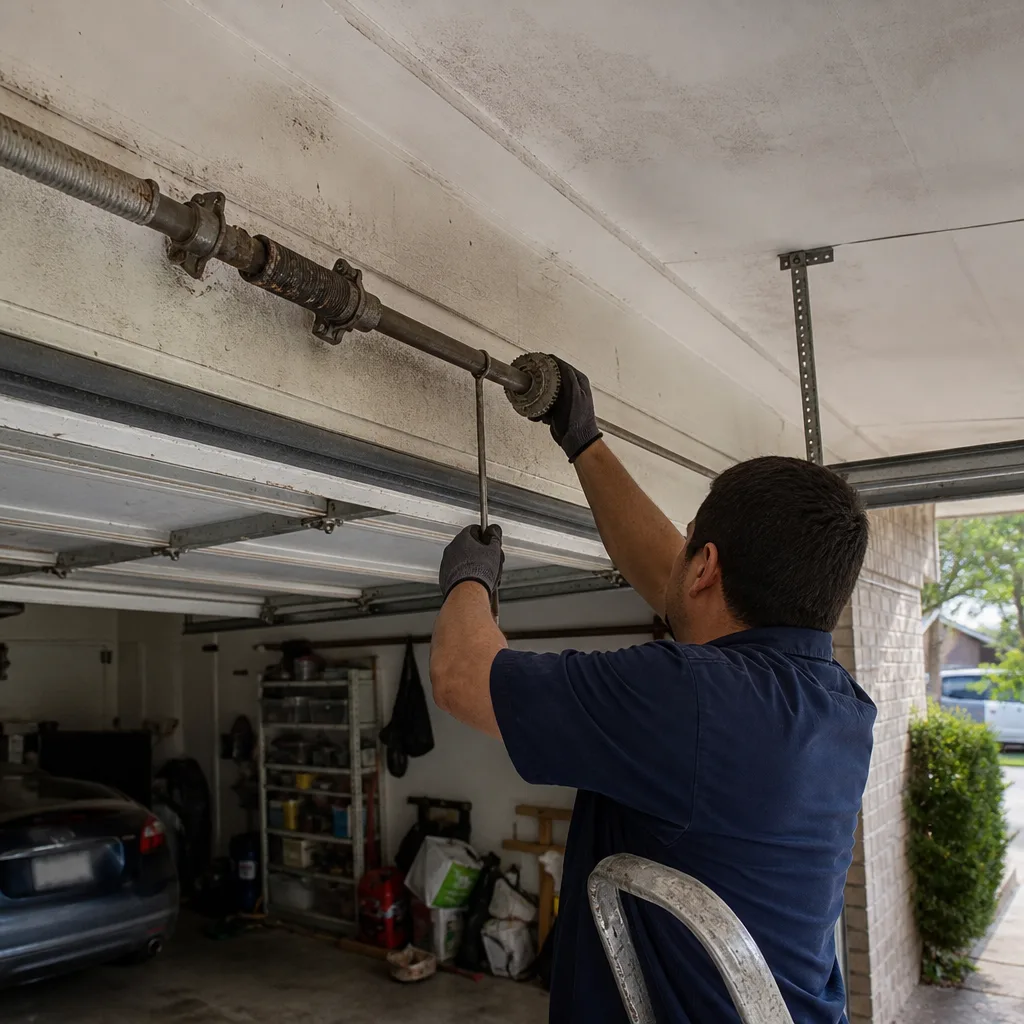 Before
 After
After Before
 After
AfterHow to Hire a Garage Door Contractor in Keller: A Step-by-Step Guide
Search “garage door repair Keller TX” and the top results look like local companies: local phone numbers, Keller addresses, five-star reviews. Three of the first five are national franchises routing calls through a Texas area code. The guy who shows up at your door has never met the owner, doesn’t live within forty miles of Keller, and is paid on commission. By the time you realize that, you’ve signed an invoice. This guide and our complete guide to garage door in Keller give you a vetting script that separates the real locals from the rebranded nationals before someone steps onto your property. You’ll learn the five phone questions that expose a call center, how to verify a license in under five minutes, and what a warranty is supposed to look like in writing.
Quick Answer
To hire a garage door contractor in Keller, verify their Texas license through the TDLR lookup tool, confirm they carry liability insurance and workers’ comp, ask whether the owner answers the phone and appears on the truck, and demand a written estimate with itemized line items that does not change between the quote and the invoice. Skip any company that pressures you to decide same-day, buries fees in fine print, or can’t name the person who owns the business. A legitimate local shop in Keller will give you a published address, the owner’s name, and a written guarantee without hesitation.
Table of Contents
- Why Hiring in Keller Is Harder Than It Should Be
- The Five Phone Questions That Expose a Call Center
- How to Verify a Texas Contractor License in Under 5 Minutes
- Insurance and Workers’ Comp: What to Ask and What the Answers Mean
- Red Flags in a Written Estimate
- Why the Cheapest Quote Is Often the Most Expensive
- What a Legitimate Warranty Looks Like
- Common Mistakes to Avoid
- When to Call a Professional
- Frequently Asked Questions
- The Bottom Line
Why Hiring in Keller Is Harder Than It Should Be
Franchise operations have spent the last decade perfecting the art of looking local. They buy Keller phone numbers. They rent virtual addresses near Keller Town Center. They register Google Business Profiles with names that sound like a family shop that’s been here since the 90s. And they aggregate reviews from five surrounding counties, so a two-star operation in Fort Worth looks like a five-star local favorite from your search results. The reviews aren’t fake. They’re just not from your neighbors.
The problem compounds because garage doors are an urgent purchase. When a spring snaps at 7 a.m. and your car is trapped inside, you don’t have three days to interview contractors. You need someone now. That urgency is exactly what national call centers count on. They bank on you not thinking straight, not reading the estimate carefully, and not having time to verify the license number printed on the invoice. The result: Keller homeowners pay forty percent above market, get parts that are a third the cycle rating of what a legitimate shop would install, and never see the same technician twice.
What actually protects you is a process. Not expertise, not intuition: a repeatable sequence of questions and checks that takes eight minutes on the phone and another five on the Texas licensing website. That process is what the rest of this guide walks through, step by step.
The Five Phone Questions That Expose a Call Center
Before you schedule anything, call the company and ask these five questions. Write down the answers. A real local operation in Keller answers all five without flinching. A call center stumbles on at least three.
- “What’s the owner’s name?” This is the single most reliable filter in the entire industry. A local shop names the owner instantly, because the person answering the phone has met them, probably this week, maybe this morning. A franchise operator pauses. They might say “our management team” or “we have multiple owners.” That pause is the answer. If the person on the phone cannot name the owner, the person on the phone does not work for the owner. They work for a payroll processor two states away.
- “Will the owner be on the truck?” This question separates the sole proprietors and family shops from everyone else. Otto answers the phone at Otto’s Garage Door home and he shows up on the truck. When the name on the van matches the name on the license and the name on the invoice, the person standing in your driveway has staked their personal reputation on your job. That’s a completely different incentive structure than a commissioned technician who’s never met the franchise owner.
- “What’s your Texas license number?” A legitimate operation reads it off the top of their head or has it posted on the website. An unlicensed operator starts explaining why a license isn’t required for this type of work, or claims to be “in the process” of getting one. Texas requires licensing for garage door installation and repair work that affects the structural operation of the door. No license, no appointment.
- “Where’s your physical address in Keller?” This one catches the virtual-office operations. A local shop gives you a real street address, often adding “we’re next to the…” because they actually occupy the building. A national chain gives you a PO box or a co-working space address they’ve never visited. You want a published address you can drive past and verify before the truck arrives.
- “Can you quote the repair on this call and hold the number?” A local owner-operator can, because they’ve fixed thousands of doors and know what a broken spring costs in Keller in March. A call center cannot, because the dispatcher has never opened a garage door panel. They’ll promise “the technician will assess on site” which is code for “the price will be determined by how much the technician thinks you’ll pay.”
If a company fails two or more of these five questions, hang up and call the next name on your list. The market in Keller has plenty of legitimate options. You don’t need to gamble on a company that can’t pass the first screen.
How to Verify a Texas Contractor License in Under 5 Minutes
Texas makes this easy if you know where to look. The Texas Department of Licensing and Regulation (TDLR) maintains a public database of every licensed garage door contractor in the state. Anyone can search it. Here’s the exact process:
- Go to the TDLR license search page. Go to the TDLR website and locate the license search tool. It’s publicly accessible and free.
- Search by company name or license number. Ask the contractor for their license number first (that was phone question number three). If they gave you one, enter it directly. If they didn’t give you a number, search by the company name exactly as it appears on their estimate.
- Verify the name matches. The name on the license must match the name on the estimate and the name on the invoice. If the license is held by “XYZ Holdings LLC” and the estimate says “Keller Garage Door Pros,” that’s a red flag. It means the entity doing the work is not the entity that is licensed.
- Check the license status. Active is the only acceptable status. Expired, inactive, suspended, or probationary all mean you keep looking.
- Check the issuance date. A license issued in 2021 might belong to a legitimate new business, but it’s worth asking how long the owner has been working in the trade. A license issued in 2004 belongs to someone who has been doing this in Texas for two decades. That’s experience you want standing in your driveway.
This entire process takes less than five minutes. The TDLR database is optimized for quick lookups. Do it before the appointment, not after you’ve signed anything. You’re not being difficult: you’re being the kind of customer a legitimate shop actually wants. Otto has been licensed in this county since 2004, and he’ll happily give you the number so you can look him up before he arrives. That’s the point of having a published license.
Insurance and Workers’ Comp: What to Ask and What the Answers Mean
A garage door is a 200-pound object riding on two high-tension springs. When a spring lets go, it doesn’t stop for a handshake. If the person working on your door isn’t covered by insurance and workers’ compensation, you are the coverage. Your homeowner’s policy becomes the deep pocket if a technician gets hurt on your property or drops a panel through your car windshield.
Here’s the uncomfortable truth: unlicensed operators rarely carry either policy. Workers’ comp premiums in Texas are significant, and a guy working out of a personal pickup truck with no license isn’t paying them. If he gets injured while working on your door, his medical bills can become your lawsuit. If he damages your property, his “I’ll make it right” is worth exactly what it sounds like: nothing in writing, nothing enforceable.
What to ask:
- “Are you insured and bonded?” The answer should be an immediate yes, followed by a certificate of insurance available upon request. A legitimate shop emails you the certificate before the appointment. No hedging, no “we carry our own coverage.”
- “Do you carry workers’ compensation for your technicians?” The answer must be yes. If the answer is “we use independent contractors,” you now have uninsured people working on your property. That’s the deal-breaker question.
- “Will the certificate list me as a certificate holder?” This lets your name appear on the documentation so you receive notification if the policy lapses. Most legitimate shops do this as standard practice. It costs them nothing and it protects you.
Licensed and insured is table stakes. In Keller, with the extreme temperature swings between August and February, springs break under load stress in ways an experienced professional understands and an uninsured amateur doesn’t, which is why seasonal garage door care for Keller matters year-round. You’re not hiring someone to mow your lawn. You’re hiring someone to safely manage a high-tension mechanical system attached to the largest moving object in your home.
Safety note: Torsion springs carry enormous stored energy. A broken spring can release that energy violently. Never attempt to remove or adjust a torsion spring yourself. This is the one component that genuinely requires a trained professional with the right winding bars and the experience to know when a spring is about to fail, so read our DIY vs professional garage door guide for Keller homeowners before considering any self-repair. If a contractor suggests you could have “done this yourself” after fixing your spring, that’s not a compliment about the job being easy. That’s a red flag that they don’t understand the danger.
Red Flags in a Written Estimate
The written estimate is where price manipulation happens. You’ve already made it past the phone screen and a technician is standing in your driveway with a clipboard or a tablet. This is the moment when the number you were quoted on the phone either holds or “adjusts.” Here’s what to look for:
- Vague line items. “Garage door repair: $850” is not a line item. It’s a guess dressed up as a quote. A legitimate estimate lists the specific parts: “Pair of 10,000-cycle torsion springs, $210” and “Spring installation labor, $145.” If the estimate doesn’t itemize at the component level, you can’t compare it to another bid and you can’t hold anyone accountable to it.
- Assessment fees buried in the fine print. Some shops charge a “diagnostic fee” that applies even if you reject the quote. That’s a pressure tactic: now you’re financially invested, so you might as well proceed. A legitimate local shop in Keller doesn’t charge you for the time they spend quoting a job. Otto doesn’t. In fact, Garage Door Repair in Keller through Otto’s Garage Door includes a no-trip-charge policy inside the home county, along with a free second opinion on any written estimate.
- Same-day decision pressure. “This price is only good while I’m here.” That’s not a sale, that’s a lever. A legitimate estimate stays valid for a reasonable window, typically 30 days, because the price of a spring doesn’t change between Tuesday and Thursday. If someone needs an answer before they walk back to the truck, the answer is no.
- Unmarked upcharge percentages. Some estimates add “materials recovery” or “shop supplies” as a flat percentage at the bottom of the invoice. Materials recovery is a line item invented by companies that want to charge you for the privilege of buying parts. A proper estimate includes parts, labor, and tax. That’s the complete list.
- The disappearing phone quote. If you were told $250 on the phone and the driveway estimate says $600, ask why. The answer is almost always non-specific: “Different door configuration,” “additional parts needed.” A legitimate contractor who quoted you on the phone will honor that number unless they discover something genuinely extraordinary on site, and even then, they call you before adding anything. The price is agreed before work begins, and it doesn’t change because a technician decided the job was worth more.
Why the Cheapest Quote Is Often the Most Expensive
Garage door parts are not commodity items with fixed pricing. The same “size” torsion spring can be rated for 10,000 cycles, 25,000 cycles, or 50,000 cycles. The price difference is substantial, and the lifespan difference is the difference between replacing the spring again in two years or in fifteen. The cheapest quote almost always correlates with the lowest-rated springs. The cheapest installer buys the spring that costs him the least, installs it, and disappears. When that spring fails again in eighteen months, his phone number has changed and his license, if he ever had one, is expired.
We count spring cycles the way you count tire miles. A 10,000-cycle spring on a door that opens four times a day lasts about seven years. A 50,000-cycle spring lasts the life of most homeownership periods. When Otto installs Garage Door Installation in Keller components, he specifies the cycle rating on the invoice so you can verify what you paid for. The cheapest quote doesn’t itemize cycle ratings because it doesn’t want you to understand what you’re buying.
The economics of unlicensed operators are simple: they compete on price because they have nothing else to offer. No warranty that will be honored, no published address you can visit, no reputation to protect on the next job. They can undercut a licensed operation by thirty percent because they’re not paying for insurance, licensing, training, or accountability. And the homeowner pays that thirty percent difference back, plus interest, when the work fails and nobody answers the phone.
What you’re paying for with a licensed, established Keller contractor is the guarantee attached to the parts and labor. A door is 200 pounds riding on two springs. When those springs are installed wrong, the door doesn’t fail quietly. It fails catastrophically, bending panels, breaking cables, and occasionally damaging the vehicle parked beneath it. The savings from the cheap quote evaporates the first time you have to pay someone else to fix the cheap job.
What a Legitimate Warranty Looks Like
Warranties fall into two categories. The first is written to protect the company. The second is written to protect the customer. Here’s how to tell them apart in thirty seconds of reading.
A legitimate warranty includes:
- A specific duration in writing. “90-day guarantee” means something. “Satisfaction guarantee” means nothing. One is enforceable in small claims court; the other is a slogan. It’s why the 90-Day Done Right Promise is printed on every invoice Otto writes: ninety days in writing, one call brings him back, no runaround.
- The owner’s name and phone number. A warranty backed by a named individual with a published address is a handshake you can hold someone to. A warranty backed by “customer service” at a 1-800 number is an automated phone tree designed to outlast your patience. Ask anyone on your street: Otto has been in this county since 2004, and Otto is a palindrome, reads the same from either end, same as the door.
- Coverage that includes parts and labor. Some warranties cover the part but charge for the labor to install the replacement. The part costs $40; the labor costs $200. A warranty that excludes labor is designed to be uncollectable in practice. A legitimate warranty covers both, in writing, without requiring you to read a footnote.
- No hoops to jump through. Some warranties require annual maintenance visits (paid), original receipts (lost), or registration within 30 days (missed). A legitimate warranty from a local shop requires exactly one thing: did we do the work? If yes, we stand behind it.
What Otto structures: ninety days on every job, no matter how small. If a spring he installed fails on day 89, he replaces it on day 89. He doesn’t ask what happened, doesn’t suggest it was somehow your fault, doesn’t charge a service fee. The name on the van is the name on the invoice and the name on the license. That’s the entire enforcement mechanism: his reputation in Keller rides on every spring he installs. A warranty from a national chain is enforced by a claims department in another state that has never met the technician who did the work. Which one do you want to call when something goes wrong?
Common Mistakes to Avoid
- Hiring the first company that appears in search results. Paid ads and franchise SEO dominate the top of Google for Keller garage door searches. Scroll past the “Sponsored” results and look for companies with real local reviews from people in your neighborhood, not aggregated ratings from five counties.
- Skipping the license verification because the work seems simple. A broken spring is a high-tension mechanical failure. Unlicensed handymen cause more garage door injuries in Texas every year than weather does. The TDLR lookup takes five minutes and eliminates the entire unlicensed category from your list.
- Accepting a quote without itemized parts. If the estimate says “door repair: $475,” you have no idea what you’re paying for. Could be a pair of 10,000-cycle springs, could be a single 25,000-cycle spring. Itemized estimates protect you from buying the cheap part at the expensive price.
- Letting urgency override judgment. Keller summers are brutal and a door stuck open means a 110-degree garage by noon. The national chains know you’re desperate. Take two extra minutes to ask the five phone questions even when you’re in a hurry. The five minutes you spend screening will save you the forty-five minutes the wrong technician spends installing the wrong part.
- Believing a warranty without reading the exclusions. “We guarantee our work” spoken aloud is not a warranty. Written, with duration, covering parts and labor, from a named individual: that’s a warranty. Ask for the guarantee in writing before signing anything.
- Paying in full before the work is complete. A legitimate contractor doesn’t ask for full payment upfront. Typically you pay on completion, after you’ve watched the door cycle several times and verified it opens and closes smoothly. If someone demands full payment before touching the door, that’s not a contractor; that’s a goodbye.
When to Call a Professional
Some garage door problems are maintenance items you can watch and learn from. Others require immediate professional attention. Call a professional when the door fails to open or close completely, when you hear grinding or popping sounds from the spring assembly, when the door hangs unevenly, when cables show visible fraying, or when the opener reverses mid-cycle for no apparent reason. These are all signs that components are under stress and about to fail catastrophically. A door that slams down because a cable snapped is not a home-repair learning opportunity. It’s a safety hazard to anyone standing in the driveway. Otto’s Garage Door offers free estimates in Keller, call (817) 241-0932, and if your opener is straining to lift the door, the problem is almost never the opener. Call for Garage Door Opener in Keller service before the strain becomes a spring break.
Frequently Asked Questions
Most garage door repairs in Keller run between $180 for a minor cable adjustment and $450 for a pair of torsion springs, with new door installations typically ranging from $1,800 to $4,500 depending on material, insulation, and window options. These are the numbers Otto quotes on the phone and holds when he arrives. The price quoted is the price paid, agreed before any work begins. Call (817) 241-0932 for an exact quote on your specific door: estimates are free and no trip charge applies inside the home county.
Spring failures and doors that won’t close are handled same-day by most legitimate local shops in Keller, including Otto’s Garage Door. A live person answers the phone around the clock. For repair and emergency calls, same-day and 24-7 availability is standard practice. Installations and new-door replacements are different: those are quoted, ordered, and scheduled, typically within one to two weeks. The urgency of a broken spring is real, the timeline for a new door is not an emergency, and a legitimate shop doesn’t pretend otherwise.
With a local owner-operator, the answer is no. The price quoted on the phone is the price you pay, unless the technician discovers something genuinely unexpected and calls you to discuss it before doing anything. Otto quotes the job on the initial call and holds that number at the door. If the technician starts adding line items without explanation, that’s the moment to stop the work and call someone else. In Keller, a fair quote survives first contact with your driveway.
Yes, legitimate repair shops in Keller carry the most common parts on the truck: torsion and extension springs across multiple cycle ratings, cables, rollers, hinges, sensors, and opener gears. Otto’s truck is a rolling parts counter, stocked for the brands most common in Keller homes, including LiftMaster openers and Clopay and Wayne Dalton doors. If the first company you call says they need to order a basic part and come back, that’s a sign they’re not a repair operation; they’re a middleman. Call (817) 241-0932 and a truck with parts will be in your driveway today.
Ask for the owner’s name and physical address, then verify both. A local businesses has a published street address in or near Keller, a named owner whose name matches the license, and reviews from people in your specific neighborhood rather than aggregated from five counties. The TDLR license lookup will confirm the business entity’s name and registration address. A franchise can buy a local phone number and a virtual address; it can’t fake a license that’s been active in Keller since 2004.
For installations and new door purchases, yes, get two or three written estimates and compare them line by line. For emergency repairs, the priority is getting a licensed, insured professional to your door quickly, and a good local company will stand behind its repair pricing. Otto offers a Free Second Opinion on any written estimate, no trip charge inside the home county, so if you’ve received a quote from another company and want a second set of eyes on it, that call is free. You’re not obligated to use the lowest bid; you’re obligated to understand what you’re paying for and that it’s fair.
The Bottom Line
Hiring a garage door contractor in Keller comes down to one skill: telling the difference between a local owner who has staked his name on the work and a national franchise that has staked an area code on the illusion. For more guides & resources, visit our blog. Ask the five phone questions. Verify the license through TDLR. Confirm insurance and workers’ comp. Read the estimate line by line and reject anything vague, anything with buried fees, anything with same-day pressure. Then choose the contractor whose warranty is written on the invoice in plain English and whose name you’ll see again at the hardware store. A door is 200 pounds riding on two springs. Respect it, and hire someone who does the same.
Call Otto’s Garage Door at (817) 241-0932 for a free estimate in Keller. Otto answers the phone, quotes the job, shows up on the truck, and writes the 90-Day Done Right Promise on every invoice. No call center, no dispatch, no surprises between the phone and the driveway.
Written by Otto Reinhardt, Owner at Otto’s Garage Door, serving Keller since 2004.