
Last updated September 10, 2026
Full 25-point door and opener safety check with every visit - springs, cables, rollers, tracks, and your LiftMaster or Chamberlain opener included
You get a price before we start. It does not change when the truck arrives.
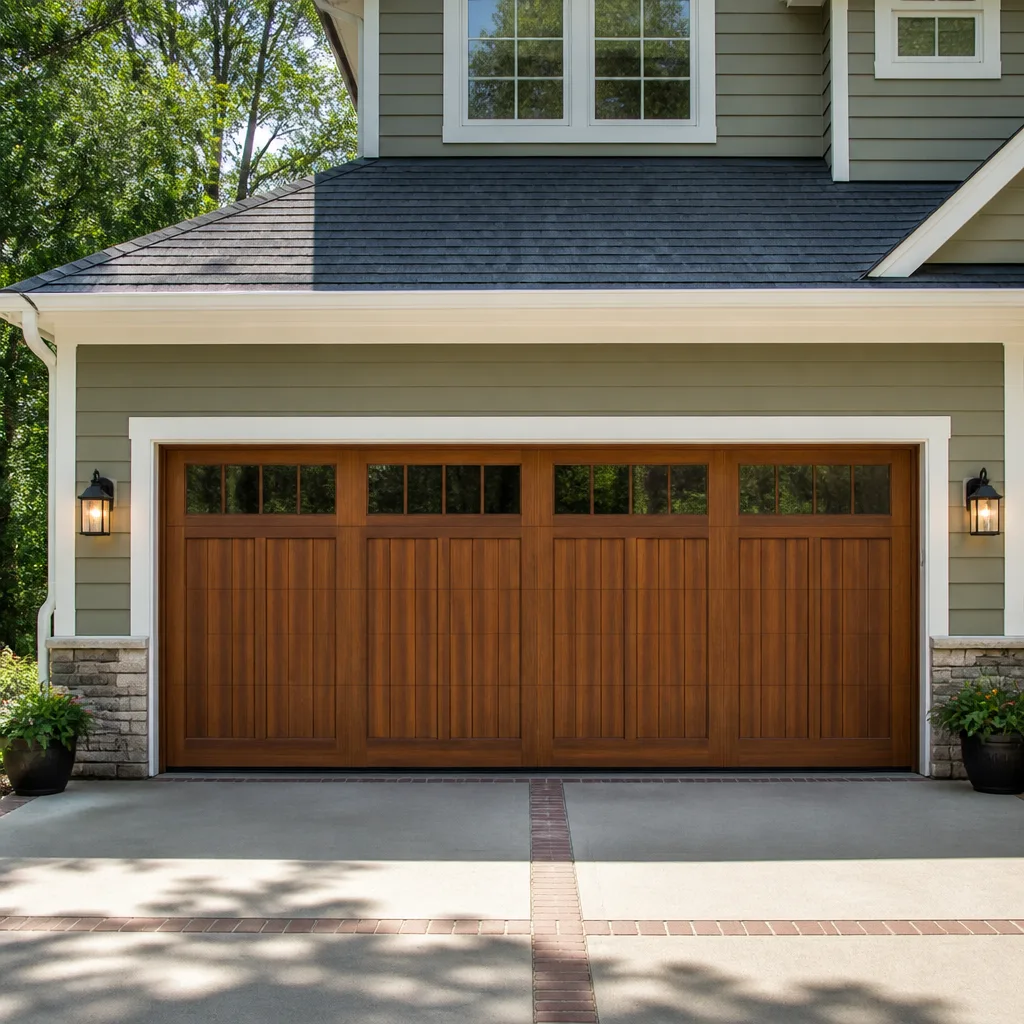
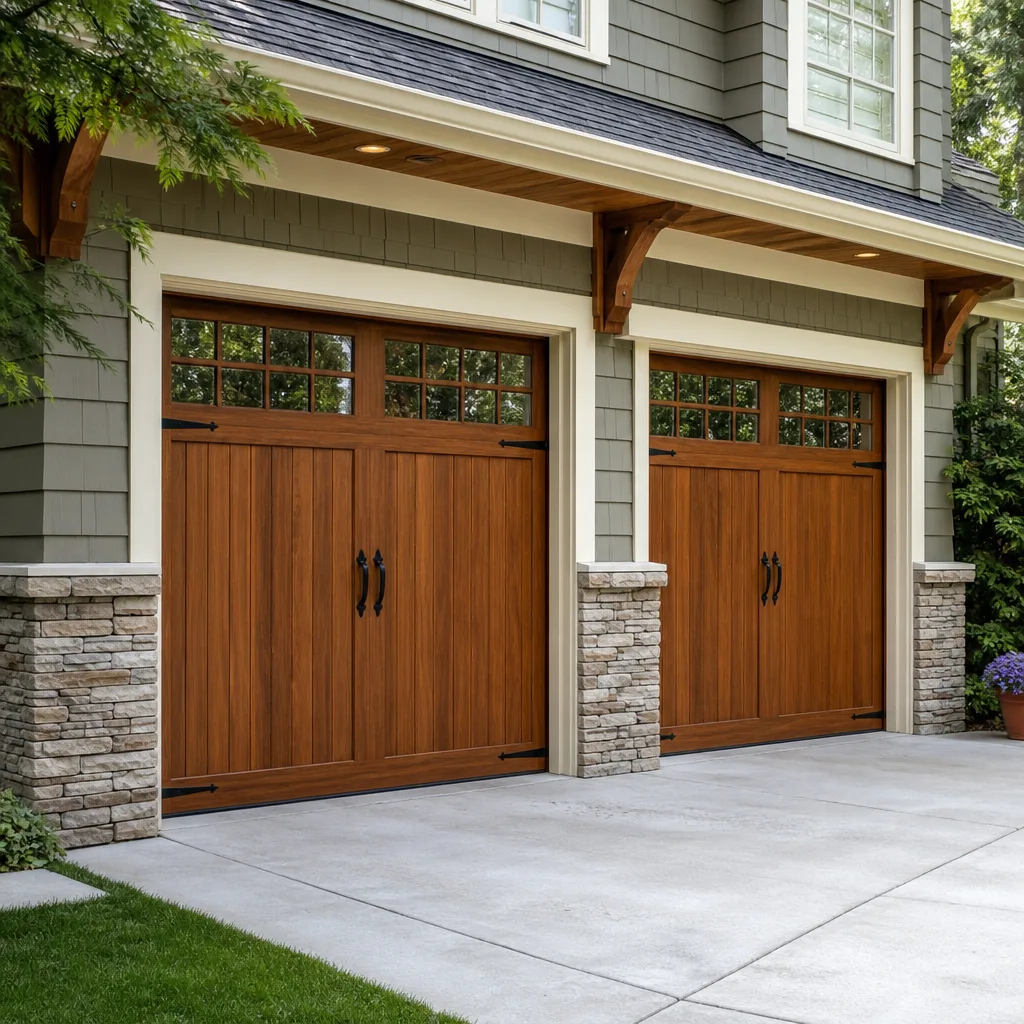
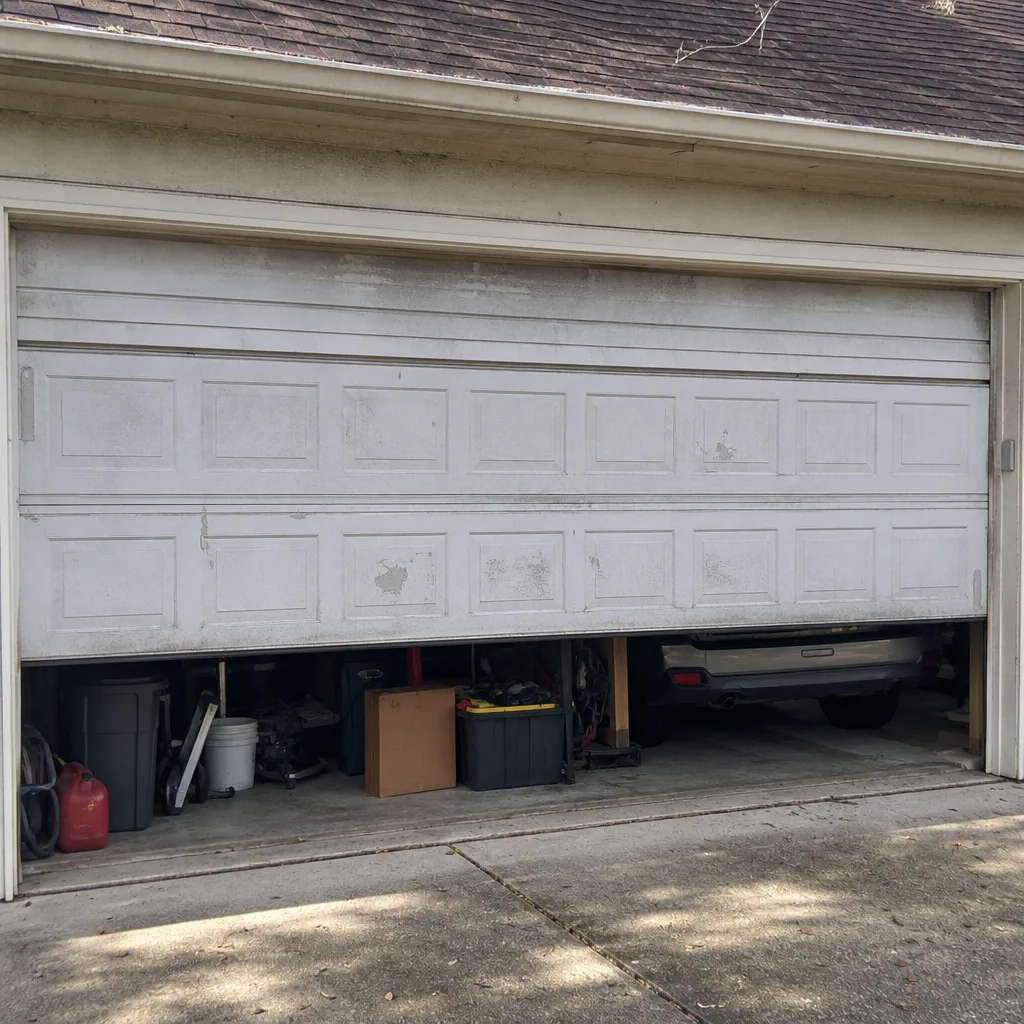 Before
 After
After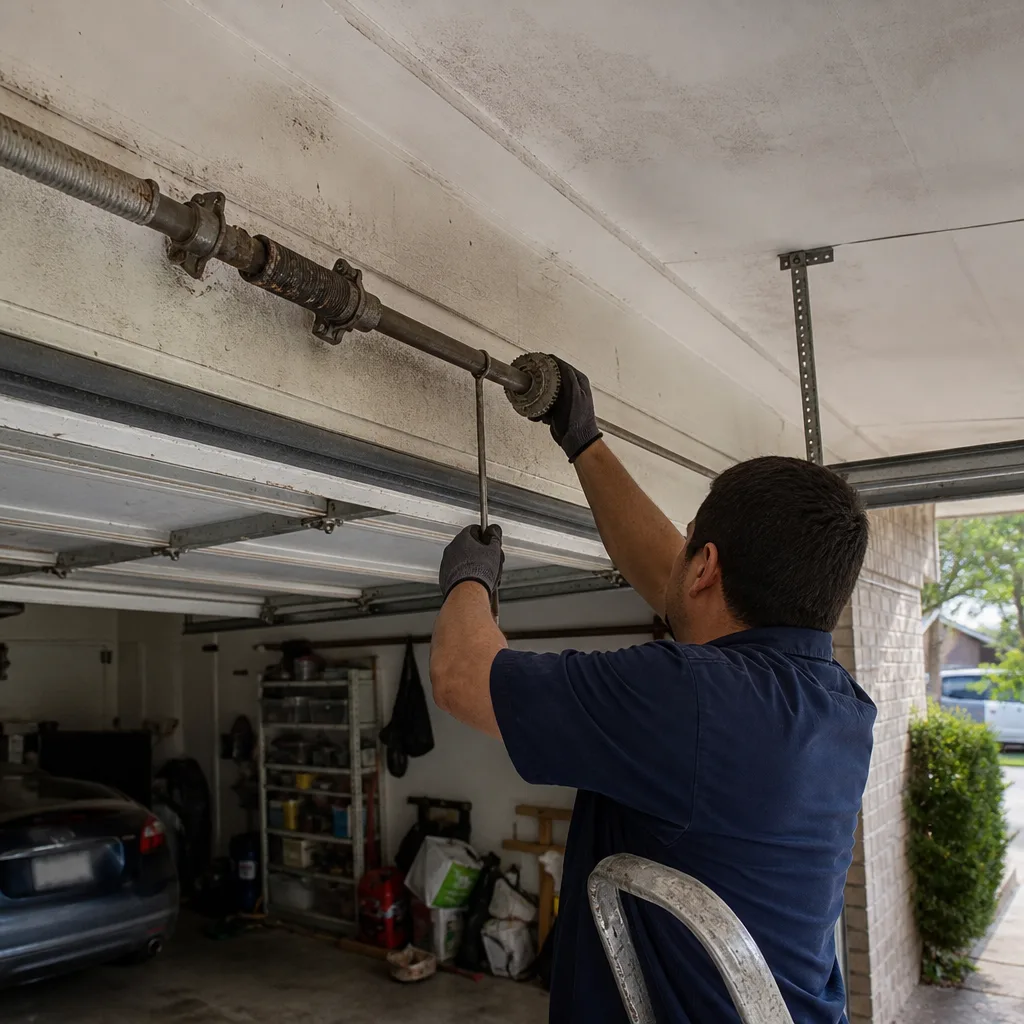 Before
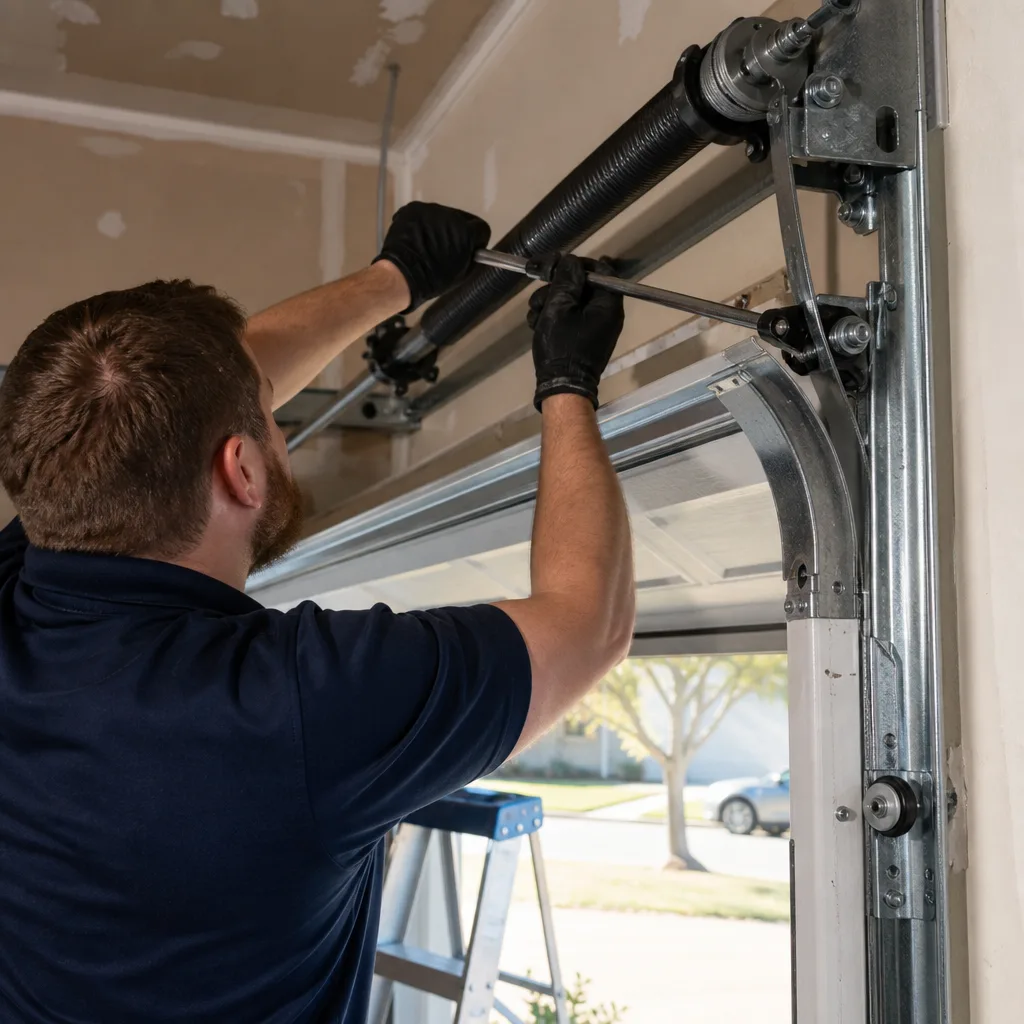 After
After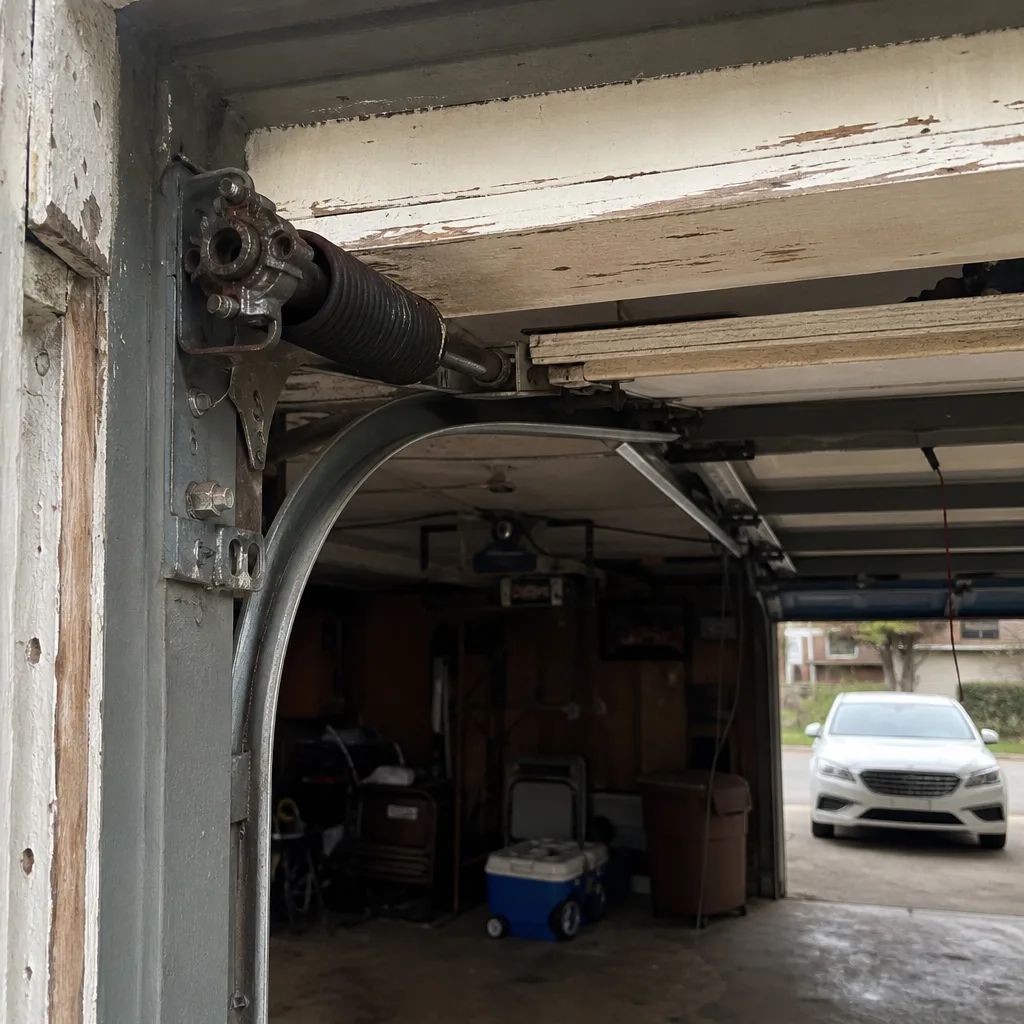 Before
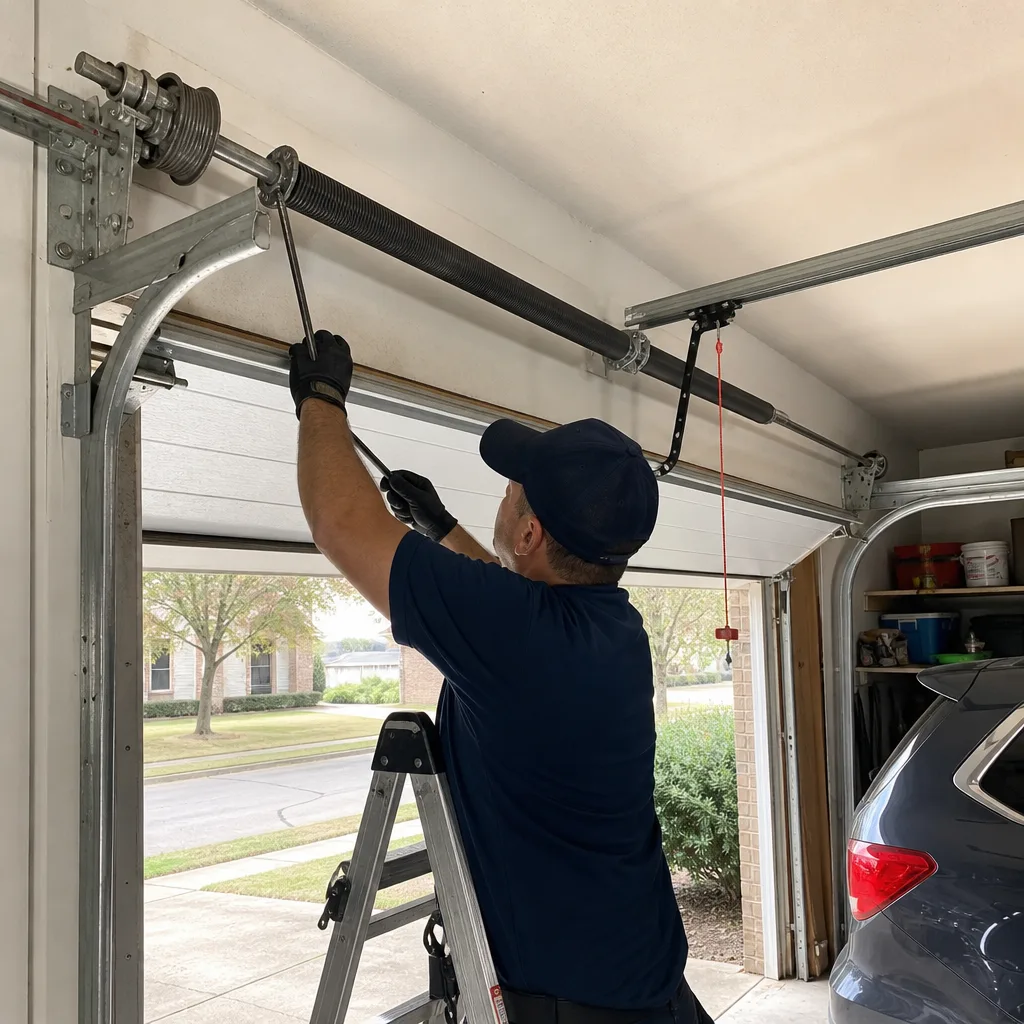 After
AfterThe Complete Guide to Garage Door in Keller
The average Keller garage door opens and closes about 1,500 times a year. That’s more mechanical cycles than your HVAC compressor logs in the same span, more than your washing machine, more than anything else bolted to your house. Yet most homeowners couldn’t name a single part on that door until something snaps at 6:30 on a Tuesday morning with the car still inside. This guide changes that. We’re going to walk the whole system, part by part, and explain why North Texas weather beats up garage doors differently than anywhere else in the country. By the time you finish, you’ll know what you’re looking at, what’s wearing out, what a fair repair costs in Keller, and when it’s smarter to replace the door outright instead of feeding it more money.
Quick Answer
A garage door is a 150-to-400-pound moving wall balanced by springs, guided by tracks, and operated by an opener. In Keller, the two components that fail most often are torsion springs (rated for roughly 10,000 cycles, or 7 to 10 years of normal use) and cables, which rust faster here because of our humidity swings. Most repairs cost between $150 and $450 when caught early; most full door replacements run $1,200 to $3,800 depending on material and size.
Table of Contents
- How a Garage Door Actually Works: Every Part, Plain Language
- Torsion vs. Extension Springs: What Keller Homes Actually Have
- How North Texas Heat and Humidity Destroy Garage Doors Faster
- Keller Permits: What Needs One and What Doesn’t
- Repair or Replace: The Honest Math
- A Keller Homeowner’s Maintenance Routine That Actually Works
- Common Mistakes to Avoid
- When to Call a Professional
How a Garage Door Actually Works: Every Part, Plain Language
Before you can diagnose anything, you need to know what’s on the wall in front of you. Here’s every major component, what it does, and what happens when it fails.
- The panels (sections): Usually four or five horizontal sections hinged together. They carry all the cosmetic weight, but they’re also structural. A dented bottom panel in Keller is often from a riding mower or a basketball, and it compromises the door’s seal against summer heat and winter wind.
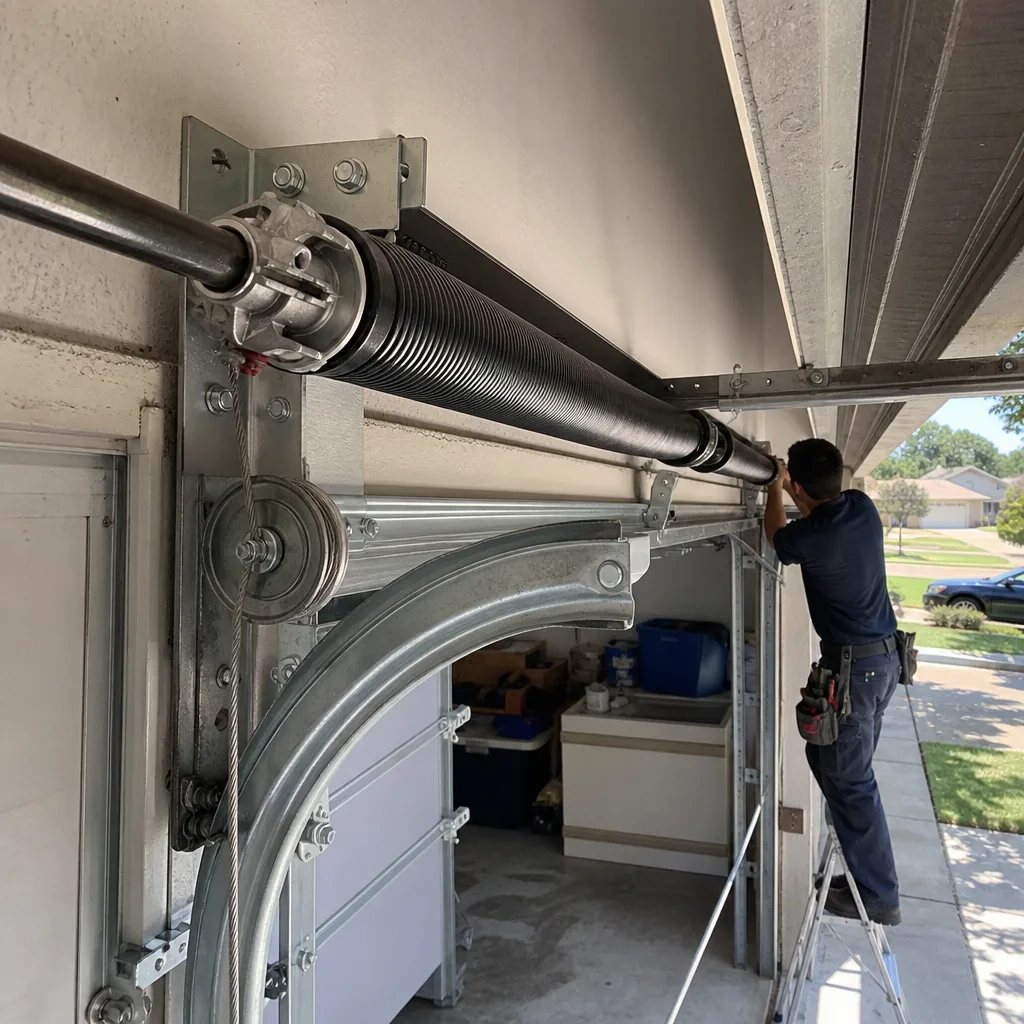
- The springs: These do the actual lifting. Not the opener. A door weighs 150 to 400 pounds; springs counterbalance that weight so a small motor (or your arm) can move it. When a spring snaps, the door becomes dead weight. More on this below.
- The cables: Steel cables run up both sides of the door, attached to the bottom brackets and wrapped around drums at the top. They transfer spring tension into lifting force. If a cable frays and lets go, that corner of the door drops hard. Cables fail more often in Keller than in drier climates because humidity accelerates rust at the connection points.
- The drums: Grooved wheels at the top of the shaft that the cables wind onto. They control how fast each side of the door rises. A worn drum can make one side lag, which puts diagonal stress on the whole assembly.
- The rollers: Steel or nylon wheels in the hinges that ride inside the track. Nylon rollers run quieter; steel rollers last longer against grit. Most Keller doors have a mix of both, and we regularly replace rollers that have gone flat on one side.
- The hinges and brackets: Connect the panels to each other and to the track system. The bottom brackets are under constant tension from the cables. If one bends, the cable can jump off the drum.
- The tracks: The vertical and horizontal rails the door travels on. Most track problems are actually alignment problems, not track problems. If the track itself bends, it’s usually from impact, not age.
- The torsion tube and shaft: On torsion systems, the shaft runs above the door, holds the springs, and turns the drums. Everything has to be in a straight line or it binds.
- The opener and trolley: A motor with a rail, a belt or chain, and a trolley that pushes and pulls the door along the track. The opener is a dumb machine. It does what it’s told. If it’s straining, the problem is almost never the opener; it’s the door underneath it. We say that every day because it’s true.
- The photo-eye sensors: Two small boxes near the floor on either side of the opening. They shoot an invisible beam; if anything breaks it while the door is closing, the door reverses. These get bumped, misaligned, or covered in grass clippings more than any other component.
If you want to see exactly what’s on your door, stand inside the garage, look up, and just identify each piece. It takes two minutes. That’s the difference between calling us and saying “my garage door is broken” versus “I think my left cable is frayed at the bottom bracket.” The second call gets a faster answer because you’ve already done half the diagnosis.
Torsion vs. Extension Springs: What Keller Homes Actually Have
There are two spring systems on residential doors, and Keller’s housing stock means you could walk into either one depending on when your house was built and who installed the original door.
Torsion Spring Systems
Torsion springs mount horizontally on a shaft above the door opening. They twist to store energy, then unwind to lift the door. You’ll find them on most doors installed after about 1995. They’re safer when they fail because they stay on the shaft, they balance the door better, and they’re rated for more cycles if you pay for upgraded springs. Most torsion springs are rated for 10,000 cycles, which in a Keller household that cycles the door four times a day works out to about seven years before the metal fatigues.
Extension Spring Systems
Extension springs mount above the horizontal tracks on both sides. They stretch and contract, like a screen door spring on a massive scale. Keller has plenty of these in tract homes built through the 1980s and early 1990s. They’re cheaper to install and they fail more dramatically: when an extension spring snaps, it can send pieces flying across the garage. Modern code requires a safety cable run through the center of each one, but if your door is original to a 1988 Keller house, it might not have them.
Here’s what matters for you: if you have extension springs and one breaks, both should be replaced. They wear at the same rate, and a mismatched pair means an unbalanced door, which wrecks rollers, hinges, and opener gears within a year. Same logic on torsion springs: if one snapped, the other is a few hundred cycles behind it. Replace them as a pair, always. We count spring cycles the way you count tire miles. We’ll tell you what’s left on yours before anything breaks.
Safety note: Garage door springs are under enough tension to seriously injure or kill a person. Never remove, adjust, or “just take a look at” a spring yourself. This is the one component where calling a trained professional is not negotiable. If the door won’t lift and you suspect the spring, leave it alone and call us. A door is 200 pounds riding on two springs. Respect it.
How North Texas Heat and Humidity Destroy Garage Doors Faster
Keller sits in a climate that isn’t kind to mechanical systems. We’re not the reason the weather is brutal, but we are the ones who see what it does to your door, and it’s different from what a garage door in Chicago or Phoenix deals with.
The heat cycle problem. A Keller summer puts your garage interior at 110 to 130 degrees on a regular afternoon. The metal parts expand. At night, they contract. Every single day, the steel in your torsion springs, your cables, and your hardware goes through a thermal cycle. That constant expansion and contraction accelerates metal fatigue. Springs in Keller fail closer to the 7-year mark than the 10-year theoretical rating because the heat is working against them every afternoon. Same with the door panels themselves: a metal door facing west can get hot enough to cook an egg, and that heat radiates inward, baking the opener’s plastic gears and wiring.
The humidity and rust problem. Keller’s humidity hangs between 60 and 90 percent for most of the summer. Steel cables, hinges, brackets, and spring coils sit in that moisture all day. Cables are the first casualty. You’ll see rust blooming at the cable loop by the bottom bracket, then the individual wires start fraying. By the time you can see it from the driveway, the cable is already compromised. We also see rusted bearing plates, seized rollers, and spring coils with surface corrosion that turns into pitting. Pitting creates stress points, and stress points are where springs snap.
A Keller-specific example: in the neighborhoods north of Keller-Hicks Road and the older subdivisions near Bear Creek Park, we see the same pattern every August. Homeowners come back from a week at the lake, open the garage for the first time in days, and snap. Why? The door sat through seven days of heat expansion without cycling. The spring coil had already fatigued over years, and that idle stretch in a 125-degree garage finished it off.
This is also why lubrication in the first week of May and the first week of October matters more than anything else you do. It’s not optional maintenance. It’s the cheapest insurance you can buy against the climate we live in.
Keller Permits: What Needs One and What Doesn’t
If you’re doing anything to your garage door in Keller, know the rules before you start. The City of Keller requires permits for some garage door work and not for others, and getting caught mid-project without the right paperwork is the most avoidable problem we see. Read our guide to Garage Door Permits, Codes & Inspections in TX: What You Need to Know before you start.
No permit required: Replacing a spring, cable, roller, hinge, sensor, or other hardware part. Even replacing the entire opener does not require a permit. If the door itself stays in place and you’re fixing what makes it move, you’re clear. We can usually do this work same day.
Permit generally required: Replacing the entire door, including the panels, when the opening size changes. Same story for any modification to the framing around the door opening. The city wants to verify structural load and wind resistance, and Keller sits in a region with meaningful wind exposure ratings. If you’re converting a single-car opening to a double, that’s a structural permit and sometimes an engineering letter. The city’s Development Services department handles all of it, and the process is typically faster than people expect if the paperwork is right.
Here’s what most homeowners don’t know: a reputable garage door company handles the permit paperwork for you. That’s part of the job. If you’re getting bids for a door replacement and the bid doesn’t mention permits, ask whether they’re included. If the answer is vague, get another bid. We’ve handled Keller permits since 2004, and we file them ourselves. You shouldn’t have to stand in line downtown for a garage door.
HOA note: this is separate from city permits. Several Keller HOAs have restrictions on door style and color, especially in newer subdivisions with architectural guidelines. Before you pick a door, check your HOA’s rules. If you don’t have an HOA, you only answer to the city. If you do, the HOA’s opinion matters more than the city’s in practical terms because they can fine you.
Repair or Replace: The Honest Math
Every homeowner eventually faces the same question: do I put another $300 into this door, or is it time to replace it? Our DIY vs Professional Garage Door: The Keller Homeowner’s Decision Guide can help, but here’s the straight answer from 29 years of looking at Keller doors.
Repair makes sense when: the door itself is structurally sound, the panels aren’t dented through the steel, the tracks are straight, and the failure is a wear part. Springs, cables, rollers, hinges, sensors, openers. These are all designed to be replaced. A spring replacement at $180 to $380 buys you another 7 to 10 years. That’s a good investment every single time. If your door is under 15 years old and the panels are clean, fix it. Don’t even think about replacing it.
Replacement makes sense when: you have multiple dented or rusted-through panels, the bottom panel has rotted where it meets the ground, the door makes so much noise the neighbors comment on it, or you’ve spent more than $600 in repairs in the last two years. Also, if you’re still running a door from 1992 with extension springs and no safety cables, that door has used up its useful life. The safety systems alone are worth the upgrade. A new door in Keller runs $1,200 to $3,800 installed, depending on material, insulation, windows, and hardware. See our Garage Door Cost Breakdown: The Keller Homeowner’s Reference for 2026 for a detailed breakdown. That sounds like a lot until you compare it to repairing a door that fails twice a year.
The honest test: stand in the driveway and look at your door. Would you buy this house again with that door on it? If the answer is no, replace it. If the answer is “it’s fine, just noisy,” then repair the parts and keep it. We’ll never sell you a door you don’t need. Half the replacement estimates we give, we tell people to fix what they have instead. Otto would rather keep a customer for twenty years than win one big ticket.
Here’s what a typical breakdown looks like in Keller:
- Spring replacement (pair): $180-$380
- Cable replacement (pair): $120-$220
- Roller replacement (all): $90-$160
- Hinge replacement (set): $80-$150
- Sensor realignment or replacement: $75-$140
- Opener replacement (installed): $350-$750 depending on horsepower and features
- Full door replacement (single): $1,200-$2,400
- Full door replacement (double): $1,800-$3,800
These are ranges from jobs we’ve done across Keller, not national averages. Your actual number depends on your specific door, your spring size, and what else we find while we’re on-site. The price is quoted and agreed before any work starts, and it does not change between the phone call and the driveway.
A Keller Homeowner’s Maintenance Routine That Actually Works
You don’t need to be mechanical to keep a garage door alive longer. You need ten minutes twice a year and the ability to hear what your door is telling you.
- Lubricate in May and October. Use a lithium-based spray or white lithium grease on the rollers, hinges, springs, and the torsion tube. Do not use WD-40 as your primary lubricant. It’s a solvent, not a lasting lubricant. It displaces moisture, which is useful, but it doesn’t stay put. Spray the springs and the roller bearings, not the track. The track should be dry.
- Look at the cables once a month. It takes ten seconds. You’re looking for rust at the bottom bracket and any wire strands poking out. If you see them, call before it snaps. A frayed cable is a $120 fix now or a $450 repair and a damaged car later.
- Check balance every six months. Pull the release handle (usually a red cord), lift the door manually to waist height, and let go. It should stay put. If it drops, the springs are wearing out. If it rises, a spring is over-tensioned. Either way, the opener is compensating for what the springs should be doing, and that’s what burns out openers.
- Clean the photo-eye sensors. Keller driveways produce dust, and dust plus humidity makes a film on the sensor lenses. Wipe them with a dry cloth. If the green light is blinking, the beam is misaligned or blocked.
- Listen. A smooth door makes a low rumble. Grinding means the rollers are seized. Squeaking means dry hinges. Popping means a cable is jumping a drum. Rattling means loose hardware. Every noise is a symptom, and symptoms are cheaper to treat early.
None of this requires the strength of a twenty-year-old or a tool collection. It requires paying attention twice a year. That’s it. If you do these five things, you’ll add years to the door, and you’ll call us when a $150 repair is still a $150 repair instead of a $1,800 replacement.
How to Choose a Garage Door Company in Keller
If you only read one section of this guide, read this one. The difference between a good garage door experience and the one you’ll tell horror stories about is the company you call. Here’s what to look for, in our honest opinion.
Check the license and address. Texas requires licensing for garage door contractors. Before you schedule anything, ask for the license number and confirm the company has a physical address in the area, not a PO box. A company with a published address and a verifiable license is accountable. A company that only exists as a phone number can disappear on you.
Ask who answers the phone. Call after hours and see what happens. If you get a live person who can talk to you about your actual problem at 9 p.m. when a spring lets go, that’s the company you want when the spring actually does let go. If you get a recording that routes you through a menu, that’s your answer too. When you call our number, a live person answers, 24/7. Often that person is Otto himself, who quotes the job on that call and holds the number when he gets there.
Get the price before the visit. Any company that won’t quote you a price range on the phone is telling you something. You shouldn’t walk into an appointment blind. We quote on the phone, and the price doesn’t change between the phone call and the driveway. The number you hear is the number you pay, every time.
Look at what’s written on the invoice. A verbal guarantee isn’t a guarantee. Ours is the 90-Day Done Right Promise, and it’s written on every invoice: if it’s not done right, we make it right. Ninety days. One call brings us back. No runaround, no customer-service queue, no “that’s a different department.” The owner answers.
Use common sense on discounts. We offer $40 off any repair over $200, a free second opinion on any written estimate from another company, no trip charge inside our home county, and a permanent 10% discount for seniors and veterans. Those aren’t gimmicks. They’re standing offers. But no legitimate company is going to offer you 60% off a door installation. When a price is too good to be true, the price is missing something.
If you want to understand how we approach the work, start at our Otto’s Garage Door home page. It’ll give you the full picture of who we are and how we operate. For anything specific about the work itself, we’ve put together detailed guides on Garage Door Repair in Keller, Garage Door Installation in Keller, and Garage Door Opener in Keller. Read them before you call. You’ll know exactly what to ask.
Common Mistakes to Avoid
- Trying to DIY a torsion spring. Two springs hold enough tension to break bones or kill. This is the one repair where “I’m pretty handy” is not a qualification. If the spring snapped, call a professional. Full stop.
- Replacing only one spring. They wear as a pair. If one snapped, the other is right behind it. Replacing one means an unbalanced door and a second service call in a few months. Replace both.
- Ignoring a slow or jerky door. A door that pauses, jerks, or slams at the bottom is warning you about something. It’s cheaper to fix the cause than to replace the opener that’s been fighting the problem for six months.
- Lubricating the track. The track should stay dry. Grease in the track collects Keller dust and becomes grinding paste. Lubricate the rollers, hinges, and springs, not the rails.
- Buying an opener without checking the door first. If your door is unbalanced or has a broken roller, a new opener will just burn out faster. Fix the door, then worry about the opener. If the opener is straining, the problem is almost never the opener.
- Scheduling work without confirming permits. Door replacement in Keller can require a city permit depending on the scope. If your contractor doesn’t mention it, you should. The permit is there to protect you.
- Shopping price alone. The cheapest bid on a garage door in Keller is cheap for a reason. A door and spring system installed poorly will cost you more in repairs within two years than the money you saved up front.
When to Call a Professional
Some jobs are genuinely DIY-friendly: lubricating, tightening visible bolts, cleaning sensors, testing the balance. Other jobs are not, and knowing the line is the whole game. Call a professional immediately if your spring is broken, your cable is frayed or snapped, your door came off its track, you see a visible gap between the panels and the frame, or the door refuses to move even when the opener is running. These are not repairs. These are emergencies involving a 200-pound object under mechanical tension. Otto’s Garage Door offers free estimates in Keller and the surrounding area. Call (817) 241-0932 and a live person will answer. If I can quote it on that call, I will, and that number holds when I get there.
Frequently Asked Questions
Most repairs in Keller run between $120 and $380 depending on the part and the door. A pair of torsion springs typically costs $180 to $380 to replace, cables run $120 to $220, and sensor repair is usually under $150. We quote the price before the visit and it doesn’t change from the phone to the driveway. Call (817) 241-0932 for an exact quote on your door.
In most cases, yes. We keep springs, cables, rollers, hinges, and sensors on the truck for the most common Keller doors, both torsion and extension systems. If your spring snapped this morning, there’s a good chance we’re finishing the job before dinner. Call (817) 241-0932 and we’ll tell you exactly when we can be there.
Standard torsion springs are rated for 10,000 cycles. In a Keller household that cycles the door four times a day, that works out to about 7 years. But North Texas heat accelerates fatigue, so we see springs failing closer to the 5-to-7-year mark in Keller than in cooler climates. If your springs are over 7 years old, we’d recommend having them checked before they snap.
Replacing hardware parts like springs, cables, rollers, and openers does not require a permit in Keller. Replacing the entire door can require a permit if the opening size changes or framing is modified. We handle Keller permit paperwork ourselves on any job that needs it. You shouldn’t have to figure it out alone.
No. The price we quote on the phone is the price you pay when the work is done. We’ve operated this way since 2004, and it’s one of the main reasons Keller homeowners keep calling us back. If we find something unexpected during the job, we stop and talk to you before doing any additional work, with the added price agreed before we touch it.
We carry the most common springs, cables, rollers, hinges, sensors, and opener parts on the truck for Keller’s most common door brands, including Clopay, Amarr, Wayne Dalton, and Craftsman. Most same-day repairs are finished on the first visit. If your door needs a specialty part we’ll tell you upfront and give you a written price before ordering anything.
The Bottom Line
Your garage door is the largest moving machine in your house, and in Keller, it works harder than doors in almost any other climate. Understanding its parts, its springs, and its wear patterns turns a surprise $380 repair into a planned expense, and a planned expense into a door that lasts twenty years. Most failures start small: a rusting cable, a dry hinge, a spring that’s lost its balance. Catch them early and they’re cheap to fix. Ignore them and they turn into a $1,800 door replacement on the worst possible morning. If you remember nothing else from this guide, remember this: check your door twice a year, replace springs in pairs, and never touch a spring yourself. For everything else, we’re twenty minutes away, and the phone is answered by a real person. You can also browse more guides & resources on our blog.
Written by Otto Reinhardt, Owner at Otto’s Garage Door, serving Keller since 2004.