
Last updated September 10, 2026
Full 25-point door and opener safety check with every visit - springs, cables, rollers, tracks, and your LiftMaster or Chamberlain opener included
You get a price before we start. It does not change when the truck arrives.
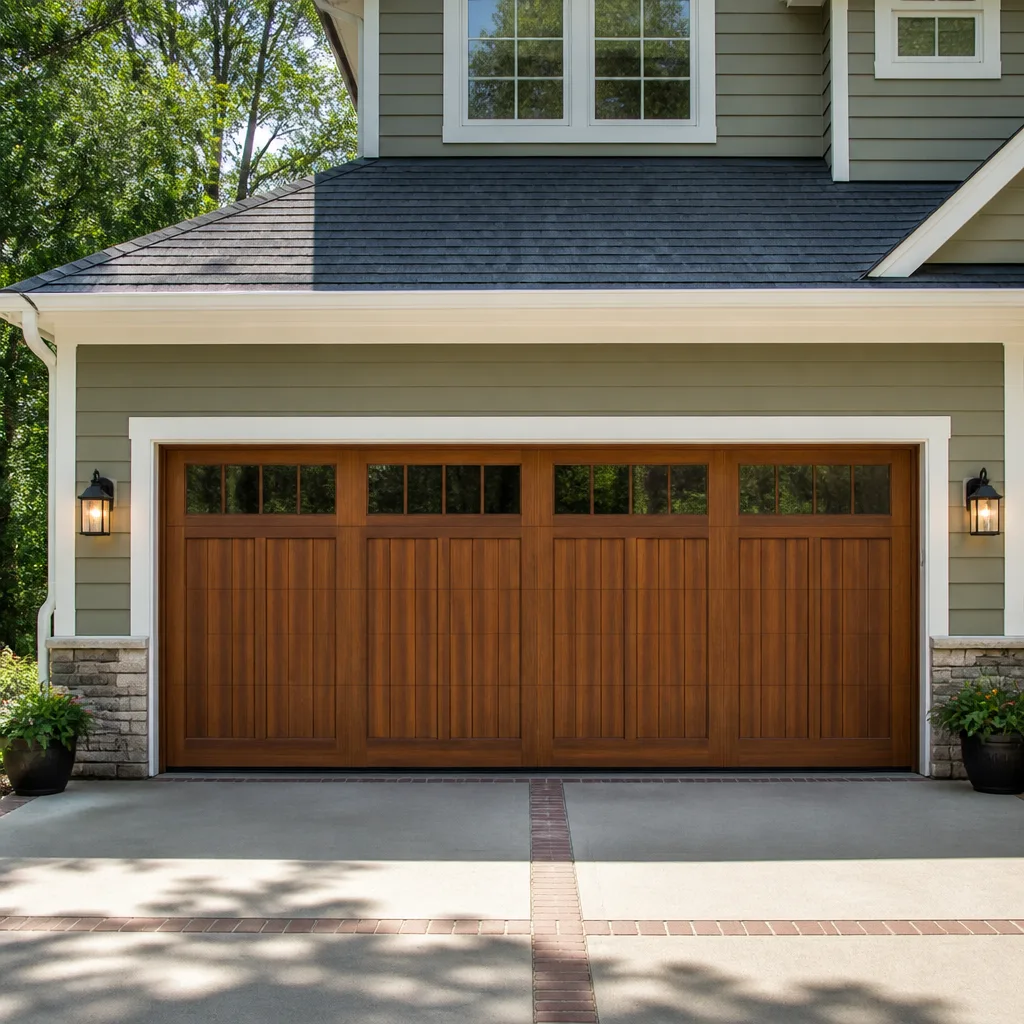
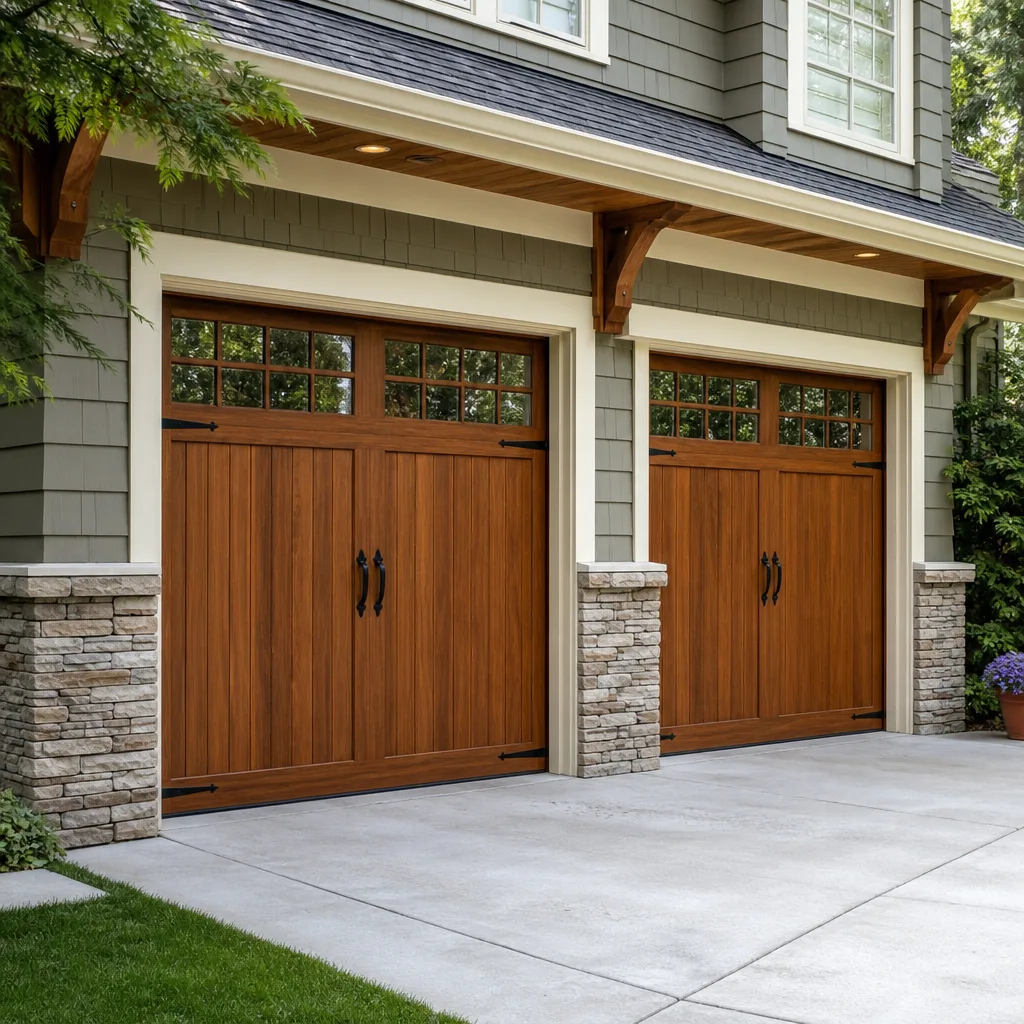
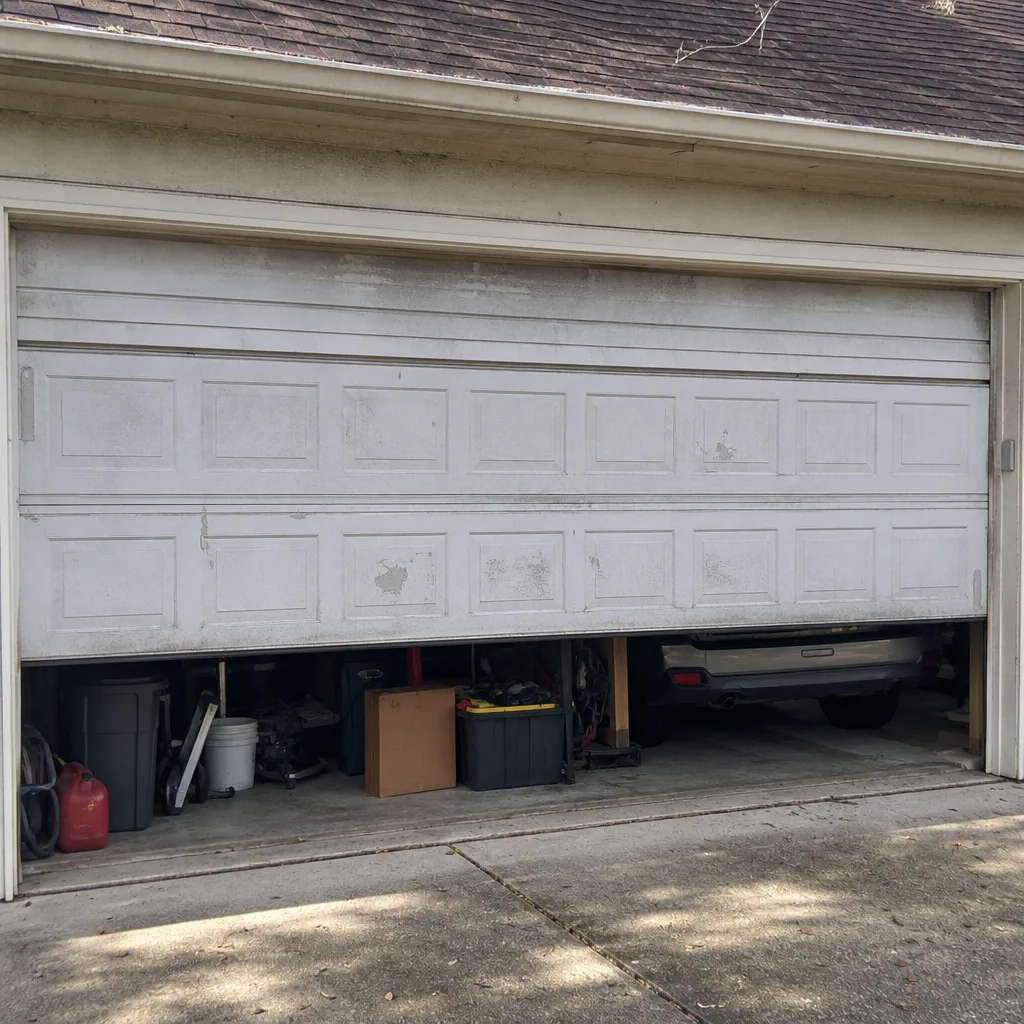 Before
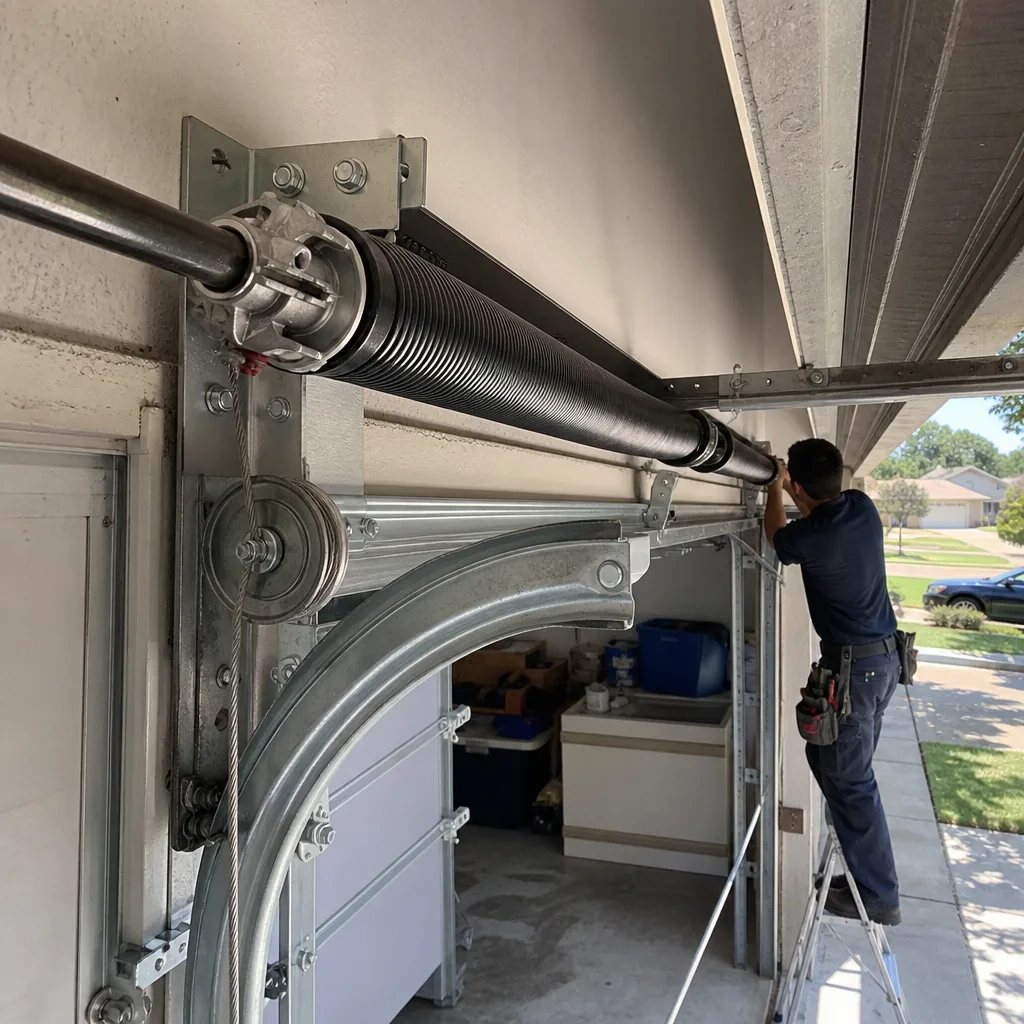 After
After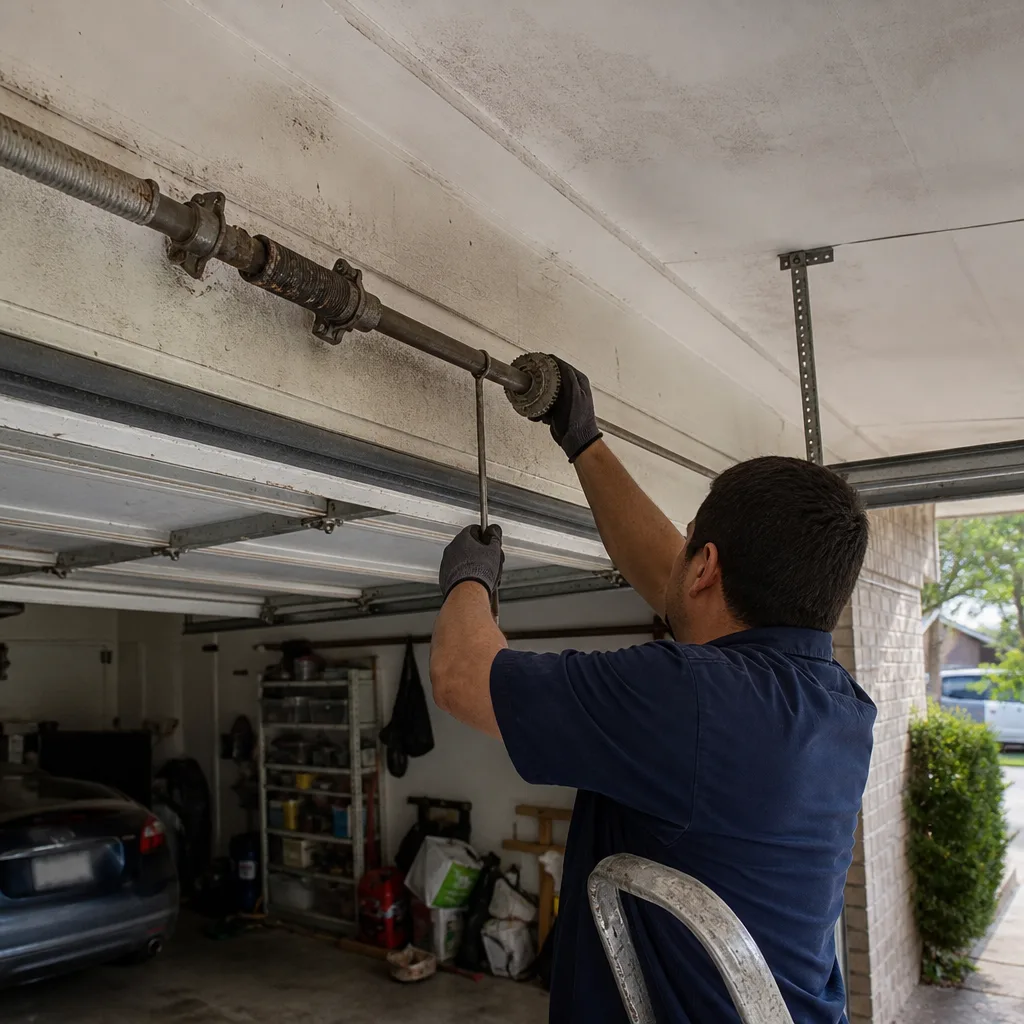 Before
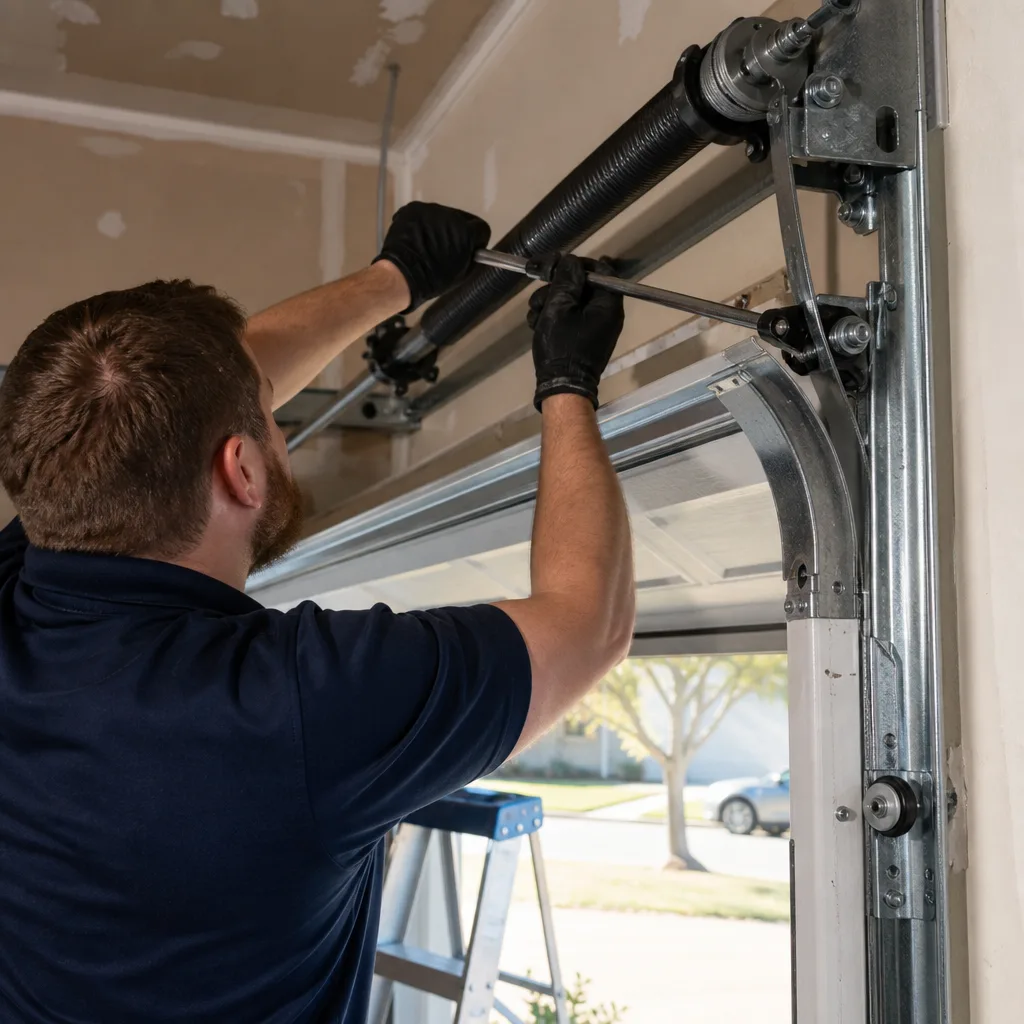 After
After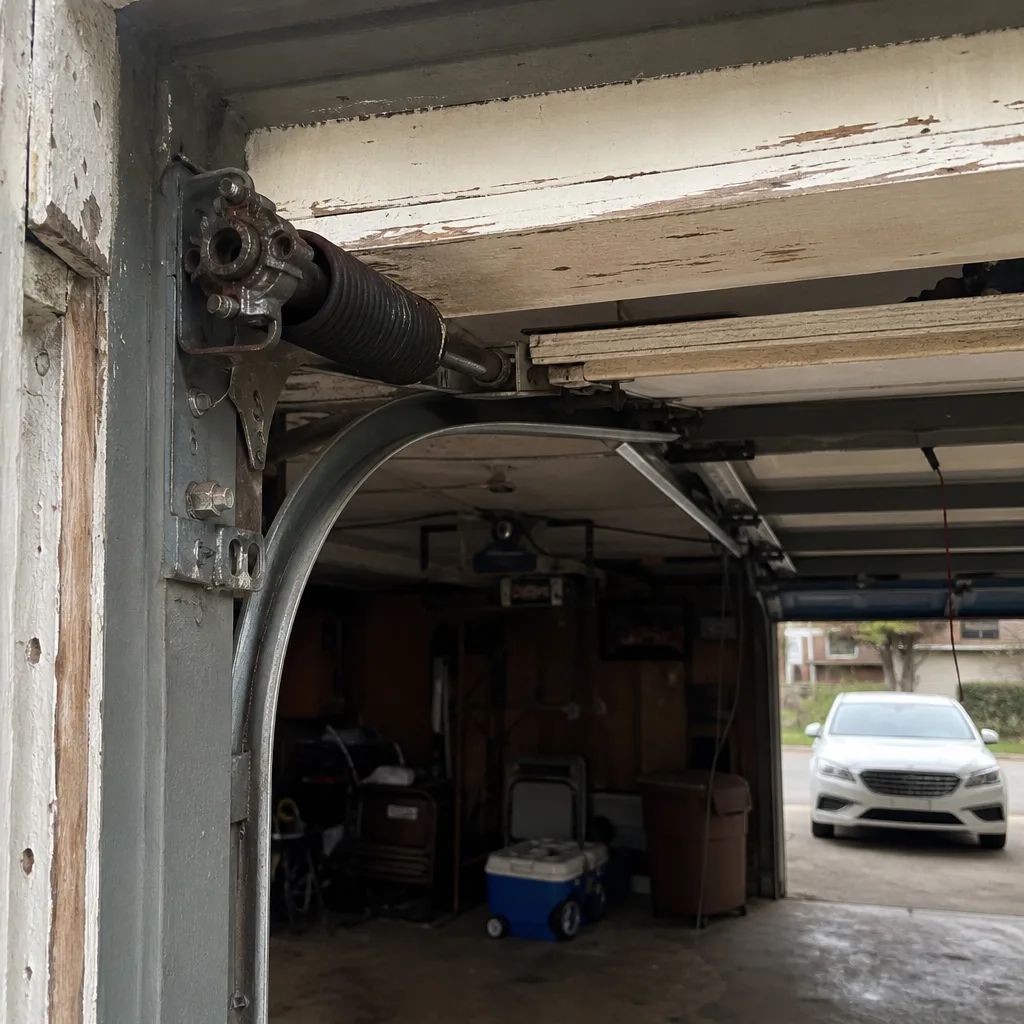 Before
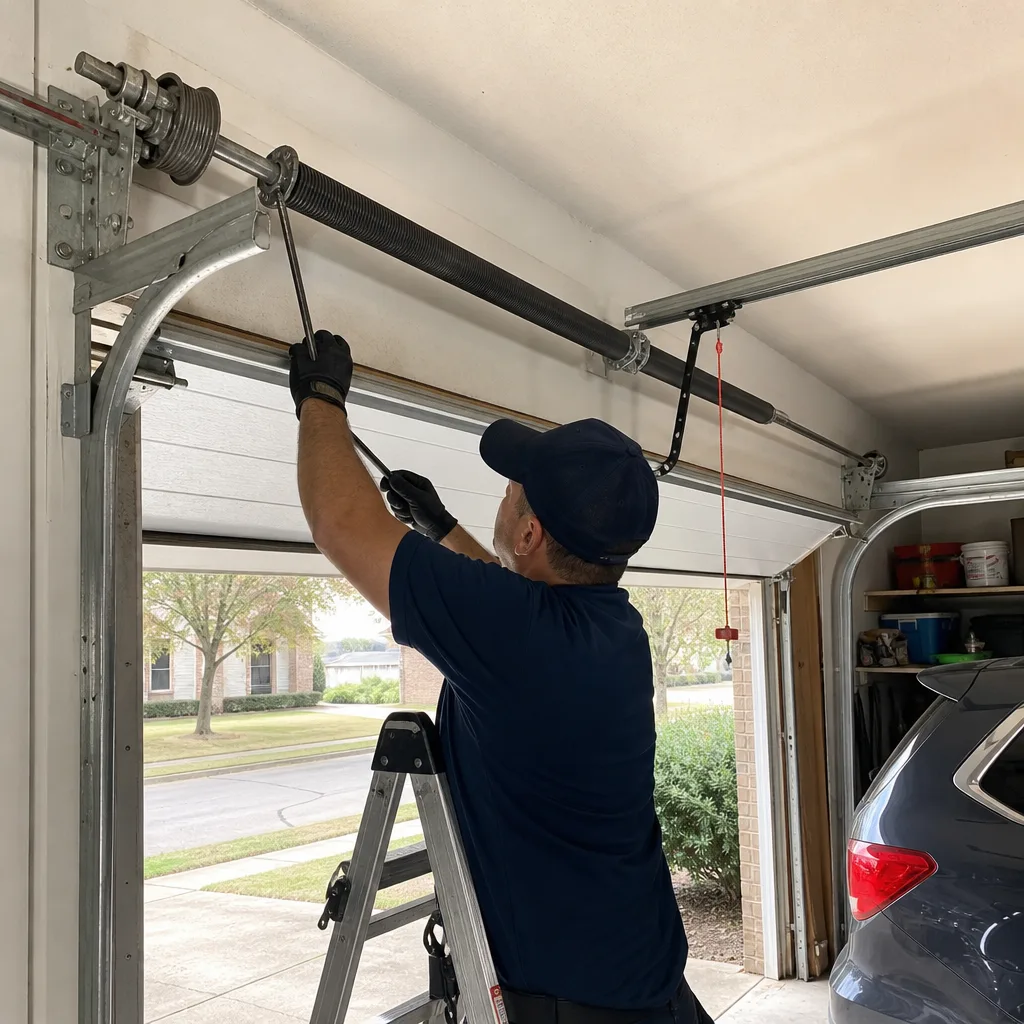 After
AfterGarage Door Warning Signs: A Keller Homeowner’s Reference Guide
A torsion spring doesn’t just snap without warning. It loses tension gradually over months, and the door tells you by drifting off-balance, pulling to one side, or reversing for no apparent reason. By the time it snaps, usually on a cold morning under load, the cable drum has already been wearing unevenly for weeks. Most Keller homeowners don’t catch these signals because nobody ever translated them into plain language. This guide does exactly that. You’ll learn which sounds mean a $12 roller and which mean a spring about to let go, what a worn cable looks like versus a dirty track, and how to tell the difference between a door you can keep using and one you need to stop using today.
Quick Answer
The most common garage door warning signs in Keller are grinding or squealing sounds during operation, a door that drifts down or feels heavy when you lift it manually, visible fraying on cables, rust blooming on rollers or springs, and the door reversing or stopping mid-cycle for no clear reason. If your door is drifting more than a few inches after you release it, or if you can see broken strands on a cable, stop using the door and call a professional. Most failures announce themselves weeks in advance; you just have to know what you’re looking at.
Table of Contents
- What Garage Door Sounds Actually Mean: A Sound-by-Sound Translation
- The Balance Test: How to Check Your Door’s Tension in 60 Seconds
- Visual Warning Signs You Walk Past Every Day
- Sensor Behavior That Looks Like a Nuisance But Signals Real Problems
- The Green-Yellow-Red Triage Framework
- Why Keller’s Climate Is Harder on Garage Doors Than Most Homeowners Realize
- Common Mistakes to Avoid
- When to Call a Professional
- Frequently Asked Questions
- The Bottom Line
What Garage Door Sounds Actually Mean: A Sound-by-Sound Translation
We’ve stood in enough Keller driveways to know that most homeowners describe garage door problems the same way: “It’s making a noise.” But grinding isn’t squealing, and popping isn’t rattling. Each sound points to a different component, and mixing them up leads to fixing the wrong thing. Here’s what each sound means in mechanical terms, and what you should do about it.
Grinding: Metal on Metal, No Lubrication
Grinding is the sound of metal wearing against metal with nothing between the surfaces. On a garage door, it almost always means the rollers have lost their internal lubrication or the bearings inside the roller have collapsed. When that happens, the roller doesn’t roll anymore, it drags. And when it drags along a steel track, you hear it. On a door that runs four times a day, a dragging roller will wear a flat spot into the wheel within a few weeks, and then it starts chewing into the track itself. A track replacement runs more than a roller replacement by a wide margin, so this is one to address early. Sometimes grinding also comes from the opener’s drive gear, especially on older Genie and Chamberlain units where the gear is made of plastic and strips over time. If the grinding is coming from the motor housing and not the track, it’s usually that gear.
Squealing: A Cry for Lubrication, Sometimes a Dying Roller
Squealing is higher-pitched than grinding and usually means friction on a rotating part that still has some movement left. On garage doors, the most common source is the torsion spring system: the spring coils rub against each other as they wind and unwind, and when the factory lubrication dries out, which it does after three to five years in a Texas garage, the spring screams. The fix is often as simple as a proper spring lubricant applied along the coil gap. But squealing can also come from the roller stems spinning dry in their hinges, or from the cable drum rubbing against the bearing plate at the end of the tube. If you lubricate the spring and the squeal doesn’t go away within a day, you’re probably hearing the early stages of roller wear.
Popping: The Sound of a Spring Under Uneven Load
Popping during operation, especially when the door stops and starts, is the sound of torsion spring coils shifting against each other under strain. It happens when a spring is beginning to lose its grip on the shaft, or when the spring’s coil spacing has become uneven, meaning the tension isn’t distributed the way it was when the spring was wound. A door that pops occasionally is telling you the spring is working harder than it should. This is a yellow-light signal at minimum. If the popping becomes rhythmic, meaning it happens at the same point in the cycle every time, the spring has developed a weak section and needs to be watched closely. In our experience in Keller, a spring that pops rhythmically for more than a couple of weeks is usually within a month or two of failing.
Rattling: Loose Hardware, Usually Harmless But Worth Tightening
Rattling is the most common garage door noise and the least urgent. It’s almost always loose nuts and bolts working their way out of the hinges, track brackets, or opener rail. A door cycles hundreds of times a month, and every cycle vibrates every fastener. Over a year in a Keller home, with the temperature swings we get, metal expands and contracts enough to back off bolts that were tight when the door was installed. The fix is a socket wrench and twenty minutes. The reason to care about a rattle isn’t the noise itself, it’s what it tells you: something is vibrating, and vibration is what kills rollers, wears hinge pins, and shakes track brackets off a wall eventually.
The Balance Test: How to Check Your Door’s Tension in 60 Seconds
The balance test is the single most useful diagnostic a homeowner can run without tools. It tells you whether your torsion springs are still doing their job, and it takes less than a minute. Here’s how to run it, what a passing result looks like, and how much drift indicates real trouble.
- Close the door completely.
- Pull the red emergency release handle on the opener rail. This disconnects the door from the opener carriage. The door is now free to move manually.
- Lift the door by hand from the bottom bracket, not the handle, and bring it up to about waist height, around three feet off the ground.
- Let go gently. Don’t push it, don’t throw it, just release it.
- Watch what the door does.
A properly balanced door will stay roughly where you left it, maybe drifting an inch or two either way. That’s a passing result. A door that drops more than six inches in a few seconds means the springs have lost enough tension that the door is heavier than the springs can hold. A door that shoots upward on its own is over-sprung, which is less common but just as hard on the opener. In Keller, where garage doors cycle more often than most parts of the country because of the heat, we see springs lose calibration faster than the industry average. A spring that was balanced two years ago can easily be off by 20% now. If you’re seeing drift of more than a foot, stop using the door and call someone. That spring is no longer doing its half of the work, and the other spring, if you have a two-spring system, is carrying the full load. That’s when failures happen.
One important clarification: this test is for seeing whether your springs are shot, not for fixing them. Torsion springs are under hundreds of pounds of tension, even when the door is open. We never recommend a homeowner touch a spring, cable, or cable drum. The balance test just gives you information to take to a professional. For a more detailed look at what a repair actually involves, see our Garage Door Repair in Keller page.
Visual Warning Signs You Walk Past Every Day
Most Keller homeowners see their garage door twice a day and never actually look at it. When you stop and look, the door shows you everything. Here are the visual cues worth stopping for, and what each one means.
Fraying Cable Strands: A Red-Light Signal
Look at the cables that run up both sides of the door, from the bottom bracket to the drum at the top of the torsion tube. These cables carry the lifting force from the spring to the door. When individual strands start poking out of the braid, the cable is unraveling. In our experience in Keller, fraying usually starts near the bottom bracket, where the cable bends at its sharpest angle. The danger here is not subtle. When a cable lets go, the full weight and spring tension transfers to the other side, the door cocks violently, and whatever is under it or in the tracks takes the impact. A frayed cable means the door should be parked and not used until it’s replaced. And since a single frayed cable is almost always accompanied by a worn drum and a spring that’s out of spec, the repair is a system-level job, not a cable swap.
Rust Blooming on Rollers: Friction You Can See
Rollers live in the tracks, and in a humid Texas garage, especially after a wet spring, they rust. Surface rust on the roller wheel is cosmetic and harmless. But when rust accumulates on the stem or inside the bearing, it creates friction. A rusted roller doesn’t spin, it drags, and every cycle drags a rough surface along the inside of the track. Over six months, that track gets scored. Over a year, the roller can seize completely and skip out of the track. Look at your rollers with a flashlight. If the wheel surface itself is rusted and pitted, they’re due. If they’re Nylon rollers, rust isn’t your concern, but cracked or chipped wheels are.
Gap Inconsistencies in Spring Coils: The Spring Is Talking
This one takes a minute to see, but it’s worth learning. When a torsion spring is healthy, its coils are spaced evenly, with gaps of nearly identical width between each turn along the whole length of the spring. As a spring ages and loses tension, the coils can bunch up at one end and stretch out at the other. That unevenness means the spring has developed a weak section. Think of it like a rubber band that’s been stretched unevenly; the thin parts are where it breaks. If you can see visibly uneven coil spacing on your spring, meaning some gaps are twice as wide as others, that spring is aging out. It may have months or it may have weeks, but it’s no longer distributing load the way it was wound. In Keller, where spring failure peaks in the winter when cold makes metal brittle, an uneven spring in October is a red flag for January.
Bent Track Sections: A Geometry Problem That Compounds
Track sections get bent three ways: a car bumper, a mower, or a door that came off its springs and slammed. A bent vertical track catches the roller at the same point every cycle, and every pass bends it a little more. The door may still run, but it’s grinding against the bend, wearing the outside edge of the roller, and stressing the hinge at that position. Horizontal tracks bend less often, but when they do, the door hesitates in the same spot every time it rounds the curve. A bent track is a yellow-light signal if it’s minor and a red-light if the roller is binding in it. This is also the most common cause of a door that works fine manually but trips the opener’s safety reverse, because the opener senses the added resistance and assumes something is in the way.
Sensor Behavior That Looks Like a Nuisance But Signals Real Problems
The photo eyes at the bottom of the door get blamed for more service calls than any other component, and sometimes that blame is earned: they’re dirty, misaligned, or the sun is hitting one at the wrong angle. But sensor behavior that comes and goes can point to something deeper than a dirty lens. Here’s how to tell the difference.
Intermittent Reversal: Not Always a Sensor Problem
When a door starts down and then reverses for no visible reason, the default assumption is that something crossed the sensor beam. And sometimes that’s true, a leaf, a broom, a spider web. But if the reversal happens at the same point in the cycle every time, especially near the floor, the problem is usually physical resistance. The door hits a rough spot in the track, or a roller starting to seize, and the opener’s internal safety logic reads that resistance as an obstruction and reverses. A door that reverses consistently at the same point is telling you something on the door itself is wrong. A door that reverses randomly at different points is more likely a sensor issue. The distinction matters because one is a ten-minute sensor cleaning and the other is a door that’s slowly tearing itself up.
Phantom Opening: The Opener That Runs By Itself
This one used to be rare, but with older LiftMaster and Genie units in Keller, we see it more than you’d think. A door that opens on its own, usually in the middle of the night, is almost always a failing circuit board inside the opener logic. The board develops a short or a cold-solder joint that sends a false signal to the motor. It’s spooky, but it’s not supernatural, and it’s not a neighbor’s remote on the same frequency, that problem mostly disappeared with rolling-code technology years ago. If your door opens by itself, check the opener’s age. If the unit is more than 15 years old, or if it’s a builder-grade unit from the early 2000s, the board is dying. A board replacement is possible, but on a unit that age, you’re often better served by replacing the opener entirely. For a look at current options, our Garage Door Opener in Keller page walks through what’s available.
LED Blink Codes: The Opener’s Diagnostic Language
Every opener made in the last twenty years has a diagnostic LED on the motor unit or wall button, and it blinks in patterns that mean specific things. On a Chamberlain or LiftMaster, one blink usually means a sensor wiring fault. On a Genie, different blink counts correspond to different failure points in the logic system. The problem is that most homeowners never see the instruction manual, and even if they did, the codes are notoriously hard to interpret without the chart. The pattern itself is the useful information. Count the blinks, note whether they’re steady or irregular, and have that information ready when you call someone. It saves a diagnostic trip. If the opener is blinking but the door still runs, you’re seeing an early-stage sensor or wiring problem that will eventually stop the door. If the opener is blinking and the door doesn’t run, the unit has locked itself out for safety, and the fix depends on which code it’s throwing.
The Green-Yellow-Red Triage Framework
Most garage door guides tell you to call a professional at the first sign of trouble, which is honest advice but not useful when the sign is a loose bolt. Here’s a simple framework we use with Keller homeowners to sort what you’re seeing into three categories: keep an eye on it, schedule service this month, or stop using the door today.
Green: Monitor It
- Rattling from loose hardware that you can reach and tighten yourself, as long as nothing is hanging off the door
- Surface rust on rollers that still spin freely and roll smoothly
- Occasional squealing that goes away after lubrication and stays away for at least a month
- A door that drifts an inch or two in the balance test but holds near the release point
- Sensor reversals that happen rarely and always trace back to something visibly in the beam path
Yellow: Schedule Service This Month
- The door drifts more than six inches in the balance test
- Spring coils show visible gap inconsistencies between turns
- Rollers are rusted to the point of pitting, or Nylon wheels show cracks or chips
- Grinding that’s consistent and coming from the track area
- Popping that happens at the same point in the cycle every time
- The opener’s motor is noticeably louder than it was a year ago
- One side of the door sits lower than the other when closed
Red: Stop Using the Door and Call Today
- Visible fraying or broken strands on any cable, even one strand
- A snapped torsion spring (this sounds like a gunshot and usually leaves a visible gap in the spring coils)
- The door sags dramatically to one side when lifting or won’t lift at all
- A roller has jumped the track, or the track itself is visibly bent and binding
- The door reverses or stops every single time at the same point near the floor
- You can hear grinding from inside the opener motor unit itself
The red category is not about inconvenience, it’s about physics. A door is 200 pounds riding on two springs. When the components that manage that weight are compromised, the door can drop, cock, and cause serious injury or property damage. Red means the door stays parked until a professional has looked at it.
Why Keller’s Climate Is Harder on Garage Doors Than Most Homeowners Realize
Keller sits in a climate band that abuses garage doors in specific, predictable ways. We’ve been working on doors in this area since 2004, and the failure patterns repeat every year. Heat is the big one. A Keller summer means sustained attic temperatures above 140 degrees, and the garage below isn’t far behind. That heat does two things to a torsion spring: it accelerates the oxidation of the spring steel’s surface, and it causes thermal expansion and contraction every single day. A spring that’s rated for 10,000 cycles in a mild climate will often fall short of that in North Texas conditions, not because the spring is defective but because the operating environment is harder on the metal.
Humidity is the second factor. Keller’s wet springs and muggy summers mean condensation inside garages, and condensation on unprotected steel means rust. Rust on a spring creates surface pitting, and pitting becomes a stress concentration point. That’s part of why spring failures cluster in the cold months, the rust and fatigue from summer meet aluminum-cold springs in December, and the combination is what snaps the spring. We also see more cable corrosion on homes near bodies of water, the creeks and lakes around Keller create microclimates where garage humidity runs higher than the county average. A homeowner who checks their cables and springs twice a year, once in October before the cold and once in April before the heat, will catch most of what this climate does to a door before it becomes a failure. For a broader look at what a full repair involves when something does let go, see our main Garage Door Repair in Keller page.
Common Mistakes to Avoid
- Lubricating to fix grinding. Grinding is metal on metal, and lubrication washes off in a week. The roller or gear that’s grinding needs replacement, not grease. Lubrication masks the symptom and buys a few quiet days at most.
- Ignoring a door that drifts because it “still opens.” A door that drifts in the balance test is running on borrowed time. The springs are failing, and every cycle is putting more strain on the opener’s motor, which was never designed to lift the door’s full weight.
- Replacing one spring on a two-spring system. When one spring on a two-spring door breaks, the other one has been carrying extra load and is near the end of its life too. Replacing only the broken one means paying for labor twice within a year and leaves the door unbalanced in the meantime.
- Treating sensor reversals as a sensor problem every time. We see Keller homeowners clean and realign their photo eyes repeatedly, only to find that the real issue is a roller seizing or a track binding at a specific point. If cleaning the sensor doesn’t fix it, stop cleaning the sensor and start looking at the door.
- Using the garage door as an everyday entry and exit. Every cycle is a cycle toward the spring’s fatigue life. In Keller, where mornings and evenings both mean the door opens and closes, a family using the garage as the primary entrance can cycle the door 2,000 times a year or more. That’s a lot of spring life used up fast.
- Putting off a bent track repair because the door still runs. A bent track section gets worse every time the door passes it. What starts as a $150 repair turns into a track section replacement and possibly new rollers when the binding finally scores something beyond use.
When to Call a Professional
Call a professional the moment you see any red-light signal: frayed cables, a snapped spring, a door that drops in the balance test, a roller off the track, or an opener that grinds internally. These are not do-it-yourself situations. Torsion springs hold hundreds of pounds of tension, and cables under load can cut through gloves and skin. We also recommend a professional for yellow-light items if you don’t have the time or confidence to check them properly. Most of what we fix in Keller could have been caught earlier with a twice-yearly visual inspection. Otto’s Garage Door offers free estimates in Keller, and a live person answers the phone when you call (817) 241-0932. If you have a written estimate from another company, bring it to us; we’ll give you a free second opinion.
Frequently Asked Questions
Garage door spring replacement in Keller typically runs between $180 and $300 for a single spring and $250 to $400 for a pair, depending on spring size and door weight. The price is quoted before any work starts and does not change when the technician arrives. At Otto’s Garage Door, we hold the number we quote on the phone. Call (817) 241-0932 for an exact price on your door.
Yes, a garage door can fall if the spring breaks while the door is open, because the spring is what holds the door’s weight against gravity. The cables are the backup, but if a broken spring has caused the cable to jump the drum, the door has nothing holding it. This is why we tell Keller homeowners to stop using the door the moment a spring snaps.
In Keller’s heat and humidity, standard torsion springs last roughly 7 to 10 years or 10,000 cycles, whichever comes first. High-cycle springs, which are oil-tempered or galvanized against corrosion, can last twice that long. We recommend high-cycle springs for any Keller door that cycles more than twice a day on average.
An opener that works intermittently is usually dealing with either a sensor that’s going out of alignment, a weak spot in the wiring, or a logic board that’s starting to fail. If the problem comes and goes with the weather, it’s often a wiring connection expanding and contracting with temperature. If it’s random with no pattern, the board is the likely culprit. Either way, test the door manually first; if the door runs smoothly by hand, the problem is in the opener system, and a Garage Door Opener in Keller service call will pin it down.
A door that sits unevenly when closed means one side is carrying more weight than the other, which usually points to a failing spring, a broken cable strand, or a hinge that’s pulling out of the door section. It’s a geometry problem with a structural cause. Don’t adjust it yourself; uneven doors are close to losing their place in the track.
Yes, modern doors, meaning anything made in the last 15 years, have tamper-resistant bottom brackets, improved cable containment, and opener systems with rolling-code security and auto-reverse sensing. If your door dates to the 1990s, a Garage Door Installation in Keller is worth considering for the safety improvements alone, especially on a door that’s already showing multiple warning signs.
The Bottom Line
Garage doors almost never fail without warning. They grind, squeal, drift, pop, and rust for weeks or months before the moment something lets go. The difference between a $120 repair and a $900 emergency replacement is usually just watching the door and knowing what you’re looking at. Run the balance test twice a year. Look at your cables and springs when you do. Trust the sounds: grinding means metal on metal, popping means uneven load, and a snap means stop using the door. If you’re not sure what you’re seeing, call someone who’s been looking at Keller doors since 2004. It costs nothing to have a conversation.
We’re Close By When You Need Us
If anything in this guide has you looking at your garage door differently, give us a call. Otto answers the phone himself most of the time, and he’ll talk through what you’re seeing and give you a straight answer. Estimates are free, the price is agreed before any work starts, and everything we do is backed by the 90-Day Done Right Promise in writing. Call (817) 241-0932, or reach out through our Otto’s Garage Door home page. If there’s something wrong with your door, you’ll know for sure before we leave, and if there’s nothing wrong, we’ll tell you that too.
Written by Otto Reinhardt, Owner at Otto’s Garage Door, serving Keller since 2004.